
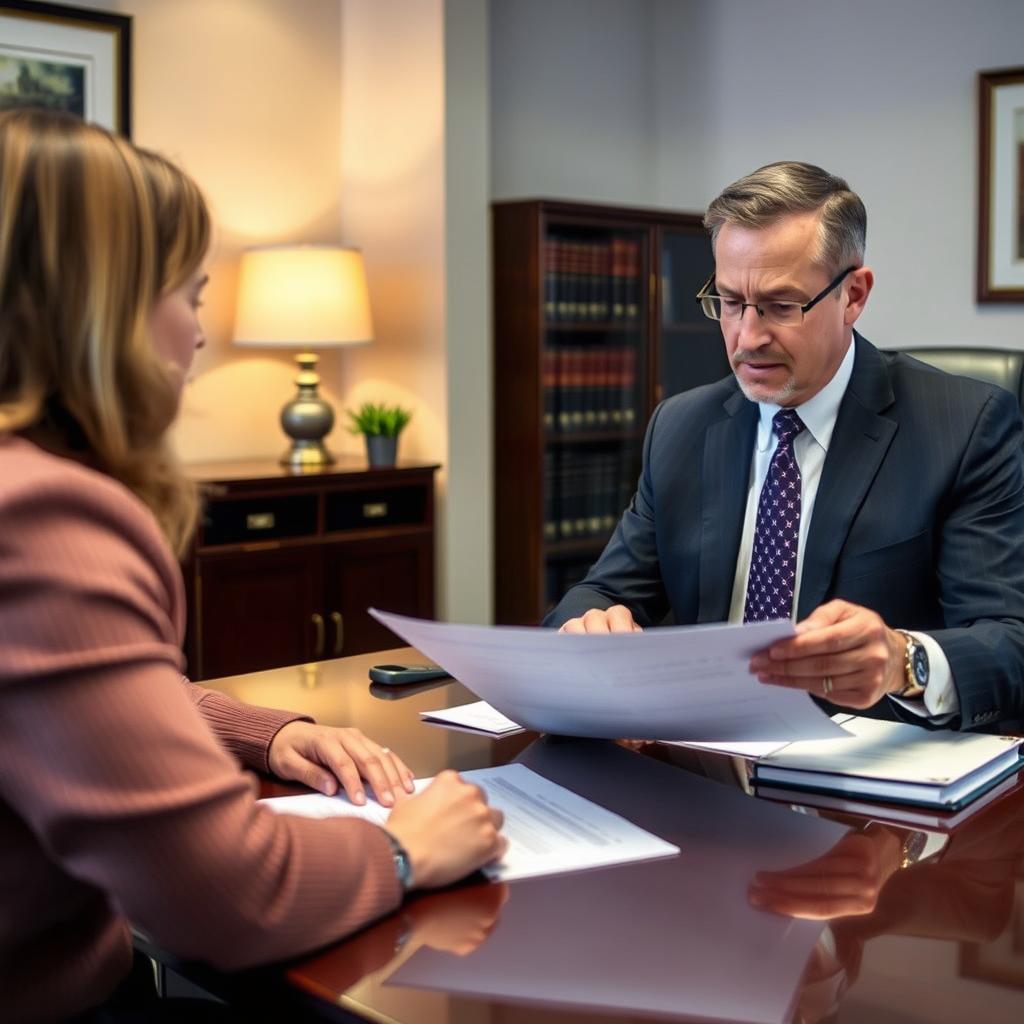
Military Divorce Lawyer James City County, VA
Military divorce presents legal issues that civilian divorces do not. The Servicemembers Civil Relief Act (SCRA) can affect case timelines when a service member’s military duties materially affect their ability to participate in proceedings. The Uniformed Services Former Spouses’ Protection Act governs how military retired pay may be divided between spouses. Deployment, permanent change-of-station orders, and the unique demands of military service can complicate custody and visitation arrangements. In James City County, Virginia, divorce and equitable distribution matters are heard in the James City County Circuit Court, while the James City County Juvenile and Domestic Relations District Court handles custody, visitation, and support. Virginia follows equitable distribution principles — marital property, including the marital share of a military pension, is divided fairly but not necessarily equally. Law Offices Of SRIS, P.C. represents service members and military spouses throughout James City County, including Williamsburg, Norge, Toano, and Lightfoot. Mr. Sris, Owner and Founder, and his Of Counsel team bring experience in military family law matters. The firm’s Richmond Location serves clients in James City County and the Ninth Judicial District. To request a consultation, reach Law Offices Of SRIS, P.C. at (888) 437-7747. Law Offices Of SRIS, P.C. — Advocacy Without Borders.
What Military Divorce Means in James City County, Virginia
A military divorce in James City County follows the same Virginia statutory framework as any other divorce, with additional layers of federal law affecting service members and their families. Under Va. Code § 20-91, a spouse may seek divorce on fault grounds — including adultery, cruelty, willful desertion for one year, or felony conviction with imprisonment of more than one year — or on no-fault grounds after a period of separation. For couples without minor children who have signed a separation agreement, the no-fault separation period is six months; otherwise, a one-year separation is required. The SCRA allows active-duty service members to request a stay of court proceedings if their military duties prevent them from participating in the case, which can affect case timelines. Virginia requires that at least one party be a resident and domiciliary of the Commonwealth for at least six months before filing for divorce, a requirement that can raise questions for military families who move frequently.
Military retired pay is often one of the most significant assets in a military divorce. Under the Uniformed Services Former Spouses’ Protection Act, state courts may treat disposable military retired pay as marital property subject to division. Virginia’s equitable distribution statute directs the court to classify, value, and distribute marital property based on eleven statutory factors, including the duration of the marriage, each spouse’s contributions to the family’s well-being, and the circumstances that led to the dissolution. For James City County families, the Circuit Court at 5201 Monticello Avenue in Williamsburg handles all divorce and equitable distribution matters. The court may also address spousal support based on the factors outlined in Va. Code § 20-107.1. Because military families in the region often have ties to nearby installations and the broader Hampton Roads area, questions of jurisdiction, residency, and the enforceability of out-of-state orders can arise. Mr. Sris and his Of Counsel work with clients to address these issues within the Virginia court system.
How Mr. Sris and His Of Counsel Handle Military Divorce Cases
Mr. Sris and his Of Counsel approach military divorce cases with an understanding of both Virginia family law and the federal statutes that affect service members. The firm’s work in military divorce involves identifying and classifying marital property — including the marital share of military retired pay — negotiating or litigating spousal support and child support under Virginia guidelines, and addressing custody and visitation in a way that accounts for deployment schedules and the demands of military service. When a service member is on active duty, the SCRA may provide procedural protections that affect how and when the case moves forward. Mr. Sris and his Of Counsel work to ensure that these protections are properly raised and that the case proceeds in a manner that respects both parties’ rights.
In contested matters, the process may involve formal discovery, depositions, and, when necessary, trial before the James City County Circuit Court. In uncontested cases, parties may resolve all issues through a signed separation agreement, which can streamline the process and reduce the time and expense involved. Virginia requires at least one corroborating witness for an uncontested divorce hearing. Mediation is available but not mandatory in Virginia, and Mr. Sris and his Of Counsel can help clients evaluate whether mediation is appropriate for their circumstances. For military families with complex financial holdings — including business interests, investment portfolios, or retirement accounts beyond the military pension — forensic accountants and business valuation professionals may be engaged to assist in property division. Law Offices Of SRIS, P.C. works with these professionals as needed to develop a complete picture of the marital estate.
About Mr. Sris and His Of Counsel Team
Mr. Sris is the Owner and Founder of Law Offices Of SRIS, P.C. A former prosecutor, he founded the firm in 1997 and is admitted to practice in Virginia, Maryland, the District of Columbia, New Jersey, and New York. Mr. Sris testified before the Virginia House Courts of Justice Committee in support of 2019 HB 635 (chief patron Del. David Bulova), a bill that revised subsection (g) of Virginia’s equitable distribution statute, Va. Code § 20-107.3. His experience with the legislative process and the statutory framework governing property division informs the firm’s approach to military divorce cases, where pension division and asset classification are often central issues.
Mr. Sris is supported by his Of Counsel team. Together, Mr. Sris and his Of Counsel bring over 120 years of combined legal experience, with 4,739+ documented firm-wide results. Results may vary. The firm’s Richmond Location at 7400 Beaufont Springs Drive, Suite 300, Room 395, Richmond, Virginia 23225, serves clients throughout James City County and the Ninth Judicial District. All consultations are by appointment. To schedule a consultation, call (888) 437-7747.
Frequently Asked Questions
How does military service affect a divorce in Virginia?
Military service affects divorce through federal laws that protect service members and govern pension division. The Servicemembers Civil Relief Act (SCRA) allows active-duty service members to request a stay of court proceedings if their military duties materially affect their ability to participate in the case. The Uniformed Services Former Spouses’ Protection Act permits state courts to divide disposable military retired pay as marital property. In Virginia, the marital share of a military pension is subject to equitable distribution, meaning it is divided fairly based on the eleven statutory factors. Deployment and change-of-station orders can also affect custody and visitation schedules. For guidance on your specific situation, reach Law Offices Of SRIS, P.C. at (888) 437-7747.
What happens to military pensions in a James City County divorce?
Military pensions are considered marital property subject to division under Virginia’s equitable distribution statute. The James City County Circuit Court applies Virginia’s equitable distribution statute to classify, value, and distribute the marital share of military retired pay. The court considers factors including the length of the marriage, each spouse’s contributions, and the circumstances surrounding the divorce. The non-military spouse’s share is generally calculated based on the portion of the pension earned during the marriage. A qualified domestic relations order or similar mechanism may be used to effectuate the division. For a consultation, reach Mr. Sris and his Of Counsel at (888) 437-7747.
Can a deployed service member delay divorce proceedings?
Yes, the SCRA allows deployed service members to request a stay of divorce proceedings under certain conditions. The service member must demonstrate that their military duties materially affect their ability to participate in the case. The court has discretion in deciding whether to grant the stay and for how long. A stay does not dismiss the case — it pauses the proceedings until the service member can participate. The protections of the SCRA apply to active-duty members of the Army, Navy, Air Force, Marine Corps, Coast Guard, and, in some circumstances, members of the National Guard and Reserves called to active duty. To discuss the details of your matter, contact Law Offices Of SRIS, P.C. at (888) 437-7747.
Do I need a lawyer for a military divorce in James City County?
You are not legally required to hire a lawyer for a military divorce, but the complexity of military family law makes legal guidance important. Military divorce involves overlapping state and federal statutes, including the SCRA, the USFSPA, and Virginia’s equitable distribution and child custody laws. Pension division alone can present significant financial consequences if not handled correctly. An experienced attorney can help ensure that your rights are protected and that all applicable procedural protections are properly raised. For guidance on your specific situation, reach Law Offices Of SRIS, P.C. at (888) 437-7747.
How do custody and visitation work when one parent is in the military?
Custody and visitation are determined based on the best interests of the child under Virginia law, with special considerations for military families. Virginia Code § 20-124.3 lists ten factors the court must consider, including each parent’s relationship with the child, the child’s needs, and any history of abuse. For military parents, deployment and relocation can require modifications to existing custody orders. Virginia law permits courts to include provisions in custody orders that address the potential for future deployment, such as temporary custody arrangements during the service member’s absence. The James City County Juvenile and Domestic Relations District Court handles standalone custody and visitation matters. To discuss the details of your matter, contact Law Offices Of SRIS, P.C. at (888) 437-7747.
Virginia legal resources: Virginia Code Title 20 — Domestic Relations · Virginia Courts · Virginia Juvenile and Domestic Relations District Courts
Attorney advertising. Prior results do not guarantee a similar outcome. Results may vary.
Case results depend on a variety of factors unique to each case.