
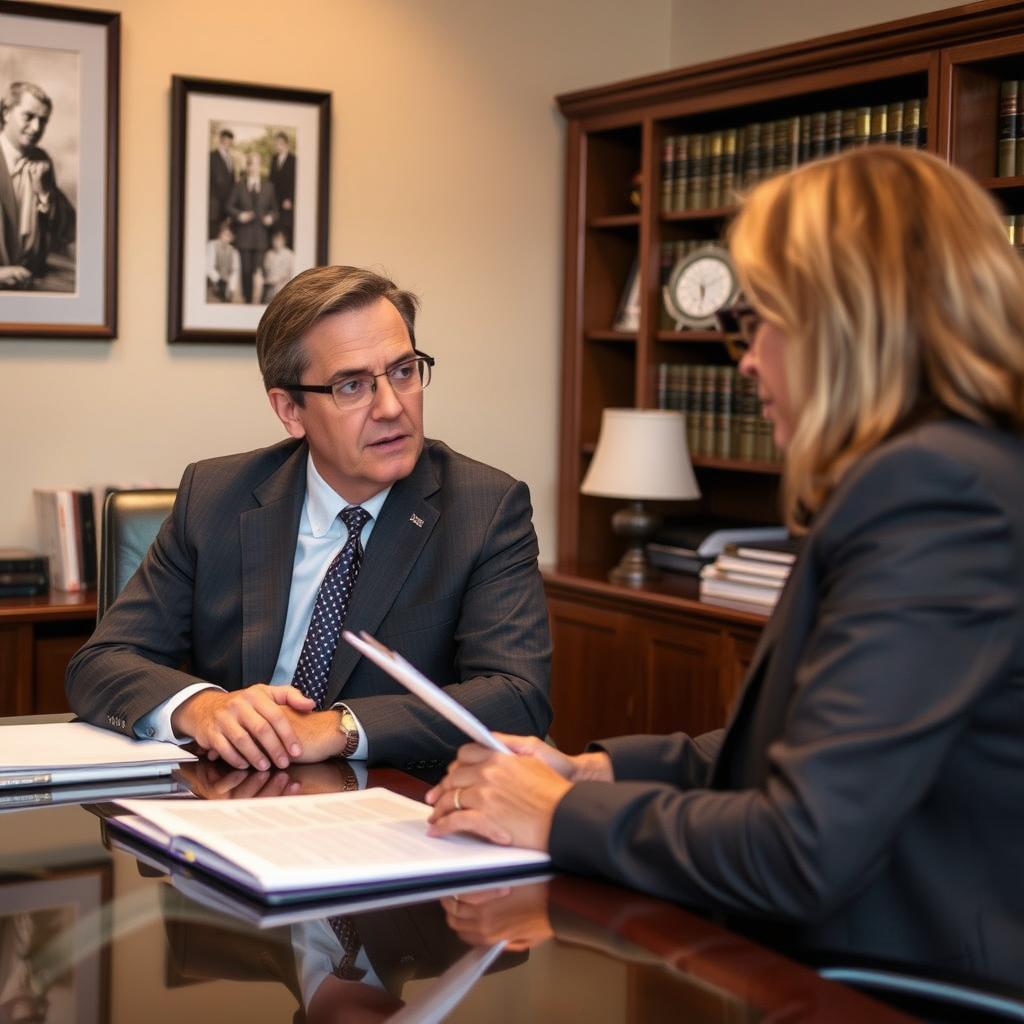
Service Member Divorce Lawyer Gloucester County, VA
For a service member or military spouse in Gloucester County, Virginia, a divorce presents unique legal considerations not found in civilian family law matters. Active-duty service members stationed at nearby bases, deployed overseas, or preparing for a permanent change of station must address jurisdictional questions, the division of military retirement benefits, and the potential application of the Servicemembers Civil Relief Act (SCRA). At Law Offices Of SRIS, P.C., Mr. Sris and his Of Counsel team bring extensive combined legal experience to service member divorce cases, helping clients navigate the intersection of Virginia’s equitable distribution framework and federal military protections. Whether the divorce is uncontested or contested, our firm handles matters in the Gloucester County Juvenile & Domestic Relations District Court for custody, support, and protective orders, and in the Gloucester County Circuit Court for the divorce itself and the division of marital property. To discuss your situation and learn how we can assist, call (888) 437-7747. Law Offices Of SRIS, P.C. – Advocacy Without Borders.
What Service Member Divorce Means in Gloucester County
Gloucester County, part of Virginia’s Ninth Judicial District, is situated across the York River from Yorktown and within reach of several major military installations, including Naval Weapons Station Yorktown, Langley Air Force Base, and Fort Eustis. Service members and their families living in communities such as Gloucester and Gloucester Point often have distinct family law needs. A service member divorce—whether one or both spouses are in the military—implicates Virginia’s divorce laws under Title 20 of the Virginia Code alongside federal statutes that may affect the case’s timing and procedural requirements.
Virginia is an equitable distribution state, meaning marital property is divided fairly but not necessarily equally among the parties, based on factors listed in Virginia Code § 20-107.3. For military families, one of the most significant assets is often the service member’s pension or retirement account, which may be subject to division under the Uniformed Services Former Spouses’ Protection Act (USFSPA) and Virginia equitable distribution law. Mr. Sris has direct experience with the statutory framework governing the division of retirement assets: he testified before the Virginia House Courts of Justice Committee in support of 2019 HB 635 (chief patron Del. David Bulova), a bill that revised the state’s equitable distribution statute and addressed how retirement benefits are handled in divorce. In Gloucester County, the Circuit Court at 7400 Justice Drive, Room 102, Gloucester, VA 23061 hears all divorce and equitable distribution matters, while the Juvenile & Domestic Relations District Court handles standalone custody, visitation, and support cases. Service members must also consider residency requirements: one spouse must have been a domiciliary and resident of Virginia for at least six months before filing (Va. Code § 20-97). Our firm is familiar with these local court procedures and can guide clients through the process.
How Mr. Sris and His Of Counsel Handle Service Member Divorce Cases
Every service member divorce begins with a thorough analysis of the parties’ circumstances, including the military status of either spouse, length of marriage overlapping with military service, and any applicable protections under the SCRA. The SCRA may allow a stay of court proceedings if a service member’s military duties materially affect their ability to participate in the case. Mr. Sris and his Of Counsel discuss these protections with clients and, where appropriate, request stays or other accommodations from the Gloucester County courts.
We then identify whether the matter can proceed as an uncontested divorce—often the case when both spouses agree on all issues and have signed a separation agreement—or whether contested litigation will be necessary. For an uncontested divorce in Virginia, the parties must have lived separate and apart for the required statutory period (six months if there are no minor children and a separation agreement is in place, or one year otherwise). If minor children are involved, issues of custody, visitation, and child support are determined under the trusted-interests-of-the-child standard in Va. Code § 20-124.3. Mr. Sris and his Of Counsel appear at the Gloucester County courts to present evidence, examine witnesses, and advocate for a result that meets the client’s objectives. Throughout the process, we work to resolve property division, support, and custody matters efficiently, mindful of the unique pressures military families face, including frequent relocations and deployment schedules. For a consultation, call (888) 437-7747.
About Mr. Sris and His Of Counsel Team
Mr. Sris, Owner and Founder of Law Offices Of SRIS, P.C., has practiced law since 1997 and is admitted to the bars of Virginia, Maryland, the District of Columbia, New Jersey, and New York. As a former prosecutor, he brings a detailed understanding of courtroom advocacy and legal procedure to family law matters. His legislative testimony in support of the 2019 revision to Virginia’s equitable distribution statute reflects a deep familiarity with the statutory framework that governs military pension division and other property issues. Mr. Sris and his Of Counsel team—attorneys engaged through Excella and working collectively with the firm—leverage extensive combined legal experience to address the full range of issues in a service member divorce. The firm serves clients throughout Gloucester County from our Richmond location by appointment, with representation in the Gloucester County General District Court, Juvenile & Domestic Relations District Court, and Circuit Court. Results may vary.
Frequently Asked Questions
How does the Servicemembers Civil Relief Act affect a divorce in Virginia?
The SCRA may allow a service member to request a stay or postponement of court proceedings if their military duties materially affect their ability to appear or participate in the case. This protection applies to active-duty members and, in some circumstances, to those who have recently left active duty. In Gloucester County, a judge will evaluate the request and may stay the proceedings for the time necessary to accommodate the service member’s obligations. The stay does not dismiss the case but pauses it until the service member can participate. An experienced attorney can help the service member or the non-military spouse understand how the SCRA applies to the specific situation.
Can a military pension be divided in a Virginia divorce?
Yes, under the Uniformed Services Former Spouses’ Protection Act and Virginia’s equitable distribution law, a military pension can be treated as marital property subject to division. The portion of the pension that accrued during the marriage and while the service member was accumulating creditable service is generally considered marital property. The Gloucester County Circuit Court can issue orders that direct the Defense Finance and Accounting Service (DFAS) to pay a share of the retirement directly to the former spouse, provided certain requirements are met, including a qualifying court order and the ten-year overlap rule for direct payment. Our firm handles the drafting of these orders to ensure compliance with federal regulations.
What if my spouse is deployed while our divorce is pending?
If a service member is deployed overseas, the case may still proceed, but the deployment often triggers SCRA protections that allow the service member to request a stay of the proceedings. The non-deployed spouse can still file for divorce in Gloucester County if Virginia’s residency and jurisdiction requirements are met. The court will then determine whether a stay is warranted. Child custody and visitation issues may be addressed through temporary orders, and deployment itself does not automatically terminate parental rights. Mr. Sris and his Of Counsel work to ensure that deployment-related circumstances are properly presented to the court so that both parties’ interests are protected. For guidance on your specific situation, reach Law Offices Of SRIS, P.C. at (888) 437-7747.
Do I need a lawyer for a service member divorce in Gloucester County?
You are not legally required to hire a lawyer to file for divorce in Virginia, but the complexities of military divorce—including the SCRA, pension division, and jurisdictional issues—make experienced legal counsel strongly advisable. A mistake in the handling of a military pension award or a failure to invoke SCRA protections can have long-term financial consequences. Mr. Sris and his Of Counsel team understand both the Virginia court system and the federal military protections that apply to service members and their families. To discuss the details of your matter, contact Law Offices Of SRIS, P.C. at (888) 437-7747.
How is child custody determined when one parent is in the military?
Virginia courts apply the trusted-interests-of-the-child standard under Va. Code § 20-124.3 regardless of a parent’s military status, and deployment alone is not a reason to deny custody or visitation. The court may issue temporary custody orders during deployment and can create parenting plans that account for the service member’s schedule. The Gloucester County Juvenile & Domestic Relations District Court handles custody and visitation matters, and our firm works with families to craft workable parenting arrangements that recognize the demands of military service. For more information, reach Mr. Sris and his Of Counsel at (888) 437-7747.
Additional authoritative resources: Virginia Code Title 20 – Domestic Relations, Gloucester County Circuit Court, Virginia Judicial System.
Attorney advertising. Prior results do not guarantee a similar outcome.
Results may vary.
Case results depend on a variety of factors unique to each case.