
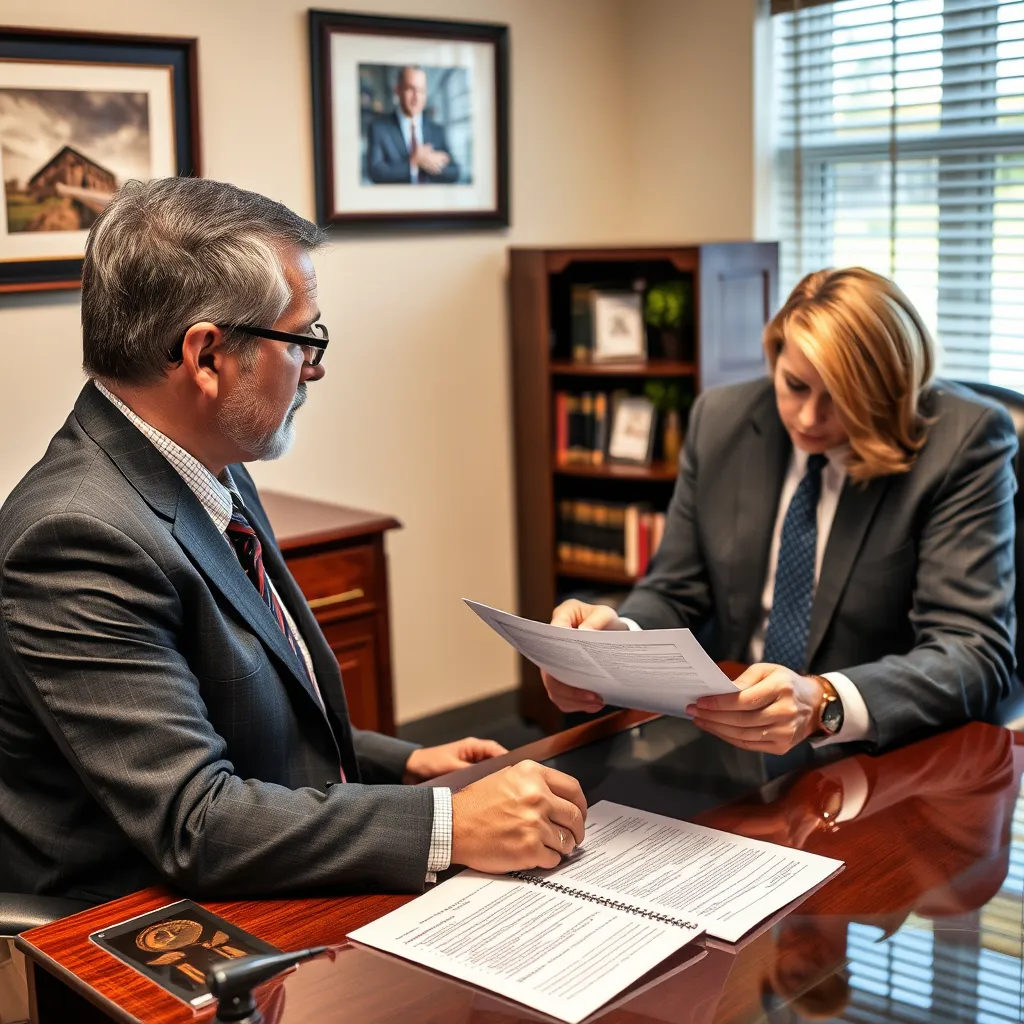
Marital Agreement Lawyer Suffolk, VA
At the Suffolk (City) Circuit Court, located at 150 North Main Street, Suite 2G, Suffolk, VA 23434, marital agreement matters—including prenuptial, postnuptial, and separation agreements—are handled with careful attention to Virginia’s equitable distribution laws. Law Offices Of SRIS, P.C., through Mr. Sris and the firm’s Of Counsel attorneys, represents clients in Suffolk, Harbour View, and North Suffolk in drafting, reviewing, and litigating marital agreements. Marital agreements in Virginia are governed by the Premarital Agreement Act (Va. Code § 20-147 et seq.) and related statutes. Whether you are entering a marriage and seek a prenuptial agreement, are already married and considering a postnuptial or separation agreement, or need to enforce or challenge an existing agreement, experienced legal guidance helps protect your rights. Mr. Sris, a former prosecutor and Owner and Founder of Law Offices Of SRIS, P.C., has practiced family law in Virginia courts since 1997. To schedule a consultation, call (888) 437-7747. Law Offices Of SRIS, P.C. – Advocacy Without Borders.
What Marital Agreement Matters Mean in Suffolk, Virginia
A marital agreement in Suffolk is a written contract between spouses or prospective spouses that defines property rights, spousal support, and other financial arrangements in the event of divorce or death. Virginia law treats these contracts as enforceable provided they meet statutory requirements: they must be in writing, signed by both parties, and entered into voluntarily with full financial disclosure. Va. Code § 20-147 et seq., known as the Premarital Agreement Act, governs prenuptial agreements; postnuptial agreements during marriage are also recognized under Virginia common law principles. Separation agreements, which resolve issues incident to divorce, are codified under Va. Code § 20-109.1.
For Suffolk residents, the local procedural context matters. The Suffolk Circuit Court has exclusive original jurisdiction over divorce, equitable distribution, and related marital agreement disputes. Standalone custody, support, and protective order matters are heard in the Suffolk Juvenile and Domestic Relations District Court. Virginia’s equitable distribution scheme—Va. Code § 20-107.3—means that a valid marital agreement can override the court’s default division of property by setting forth the parties’ own terms. Our Richmond Location represents clients in Suffolk matters, and the firm’s Of Counsel attorneys appear in these Fifth Judicial District courts regularly. Because Suffolk courts require strict compliance with statutory formalities, having a marital agreement drafted or reviewed by an experienced attorney can prevent costly challenges later. Complex marital estates often involve forensic accountants and business valuators—resources our firm coordinates as needed.
How Mr. Sris and the Firm’s Of Counsel Attorneys Handle Marital Agreement Cases
The firm approaches marital agreements with a focus on thoroughness and clarity. The process typically begins with an in-depth consultation to understand the client’s assets, liabilities, income, and objectives. For a prenuptial agreement, that means gathering full financial disclosure from both parties before the wedding. For a separation agreement, it involves cataloging marital and separate property, evaluating spousal support factors, and addressing child-related matters if applicable. Mr. Sris and the firm’s Of Counsel attorneys then draft or review the agreement to ensure compliance with Virginia law and to reflect the parties’ intentions accurately.
When a dispute arises—whether one party seeks to set aside an agreement on grounds of fraud, duress, or unconscionability, or enforcement is contested—the litigation team is prepared to present the matter in Suffolk Circuit Court. Virginia courts examine the agreement’s execution and the surrounding circumstances, not just the text. Our firm has experience handling the procedural and evidentiary demands of such hearings, including the presentation of financial expert testimony when needed. Throughout the process, the goal is to reach a fair, enforceable resolution without unnecessary delay. Mr. Sris and the firm’s Of Counsel attorneys bring extensive combined legal experience. Results may vary.
About Mr. Sris and the Firm’s Of Counsel Attorneys
Mr. Sris, Owner and Founder of Law Offices Of SRIS, P.C., has practiced family law in Virginia since 1997. A former prosecutor, he brings a practical understanding of how Virginia courts analyze contract and equity issues in marital agreements. Mr. Sris is admitted in Virginia, Maryland, the District of Columbia, New Jersey, and New York. He testified before the Virginia House Courts of Justice Committee in support of 2019 HB 635 (chief patron Del. David Bulova), legislation that revised the equitable distribution statute’s pension provisions.
The firm’s Of Counsel attorneys—independent practitioners who contract directly with Law Offices Of SRIS, P.C.—contribute substantial experience to marital agreement matters. Some have backgrounds as former Virginia State Troopers and former Maryland prosecutors, providing insight into evidence and litigation strategy. Others bring decades of trial practice and complex family law experience. The firm’s collective approach ensures each matter receives the focused attention it deserves. To request a consultation, call (888) 437-7747.
Frequently Asked Questions
How does a Virginia lawyer enforce or challenge a marital agreement in Suffolk?
A Virginia lawyer enforces or challenges a marital agreement by filing a pleading in the Suffolk Circuit Court and presenting evidence on contract validity, voluntariness, and full disclosure. Enforcement actions seek to compel performance or damages; challenges often claim fraud, duress, unconscionability, or non-compliance with the Premarital Agreement Act. The court examines the agreement’s execution and the parties’ relative sophistication. Procedurally, the case follows Virginia rules of evidence and civil procedure. An experienced attorney evaluates the specific facts, gathers supporting documents, and represents the client’s position at trial or through negotiation. For guidance on your specific situation, reach Law Offices Of SRIS, P.C. at (888) 437-7747.
What should I do if I need a separation agreement in Suffolk, Virginia?
If you need a separation agreement in Suffolk, consult a family law attorney promptly to identify all issues that must be resolved—property division, spousal support, and, if applicable, custody and child support. Virginia law (Va. Code § 20-109.1) allows a separation agreement to be incorporated into a final divorce decree. The agreement must be in writing and signed by both parties. A well-drafted separation agreement can serve as the basis for a no-fault divorce after the required separation period. The firm’s attorneys can help you negotiate terms, draft the document, and file it with the Suffolk Circuit Court. To discuss the details of your matter, contact Law Offices Of SRIS, P.C. at (888) 437-7747.
Can a postnuptial agreement protect my assets in Virginia?
Yes, a properly executed postnuptial agreement can protect your assets in Virginia by defining what is marital versus separate property and by establishing spousal support terms in the event of divorce. Virginia courts enforce postnuptial agreements under common law contract principles, provided they are entered voluntarily without coercion and with full financial disclosure. Unlike prenuptial agreements, which are governed specifically by the Premarital Agreement Act, postnuptial agreements rely more on general contract law but are similarly scrutinized. The Suffolk Circuit Court will assess fairness and procedural regularity. For a consultation, reach Mr. Sris and the firm’s Of Counsel attorneys at (888) 437-7747.
Do I need separate legal representation for each spouse when drafting a marital agreement?
While Virginia law does not mandate separate attorneys for each party, it is strongly advisable for each spouse to have independent legal counsel to ensure the agreement is enforceable. If one party lacks independent advice, the court may later find the agreement unconscionable or signed under duress. Independent review also helps confirm that each party fully understands the rights being waived. Mr. Sris and the firm’s Of Counsel attorneys typically represent one spouse; the other spouse is encouraged to retain their own counsel. This approach reduces the risk of future challenges. For guidance, call (888) 437-7747.
How is a marital agreement different from a separation agreement in Virginia?
A marital agreement is a broad term covering prenuptial and postnuptial agreements that define property and support rights during marriage and upon divorce, while a separation agreement specifically resolves issues incident to a pending or contemplated divorce. Marital agreements are governed primarily by the Premarital Agreement Act (Va. Code § 20-147 et seq.); separation agreements are addressed under Va. Code § 20-109.1. Both must be in writing and entered voluntarily. Separation agreements may be incorporated into a final divorce decree, whereas pre- and postnuptial agreements are standalone contracts. The Suffolk Circuit Court handles all three types.
What makes a marital agreement unenforceable in Suffolk?
A marital agreement may be held unenforceable in Suffolk Circuit Court if it was signed involuntarily, without adequate financial disclosure, or if its terms are unconscionable at the time of execution. Virginia courts also void agreements that violate public policy or that attempt to limit child support or custody below statutory standards. Procedural defects, such as lack of a written signed document, are fatal. The party challenging enforcement bears the burden of proof. An experienced attorney can anticipate these pitfalls during drafting. To protect your agreement, reach Law Offices Of SRIS, P.C. at (888) 437-7747.
Related Family Law Services: Family Law Lawyer Fairfax County, VA | Family Law Lawyer Prince William County, VA | Family Law Lawyer Loudoun County, VA | Divorce Lawyer Suffolk, VA
Virginia Legal Resources: Virginia Code Title 20 (Domestic Relations) | Suffolk Circuit Court | Virginia Judicial System
Attorney advertising. Prior results do not guarantee a similar outcome. Case results depend on a variety of factors unique to each case. Results may vary.