
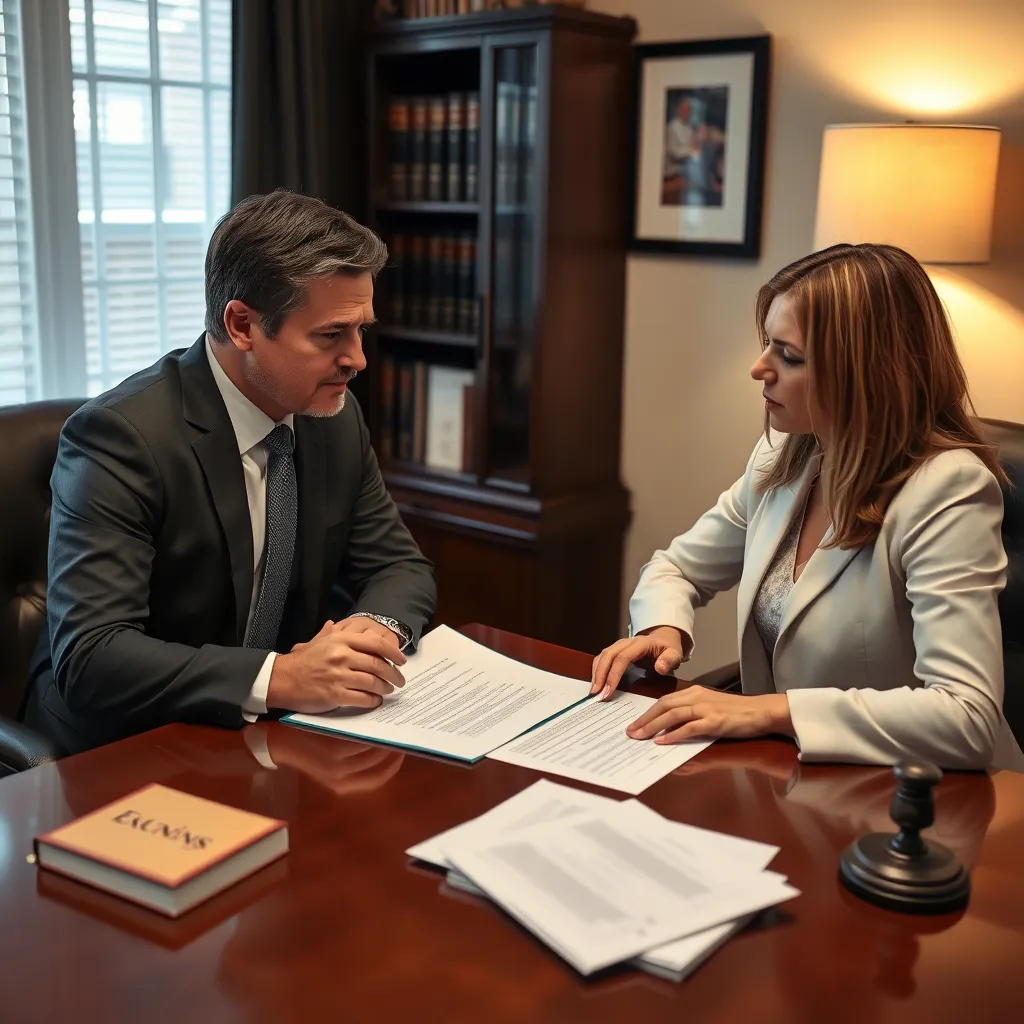
Prenuptial Agreement Lawyer Suffolk, VA
A prenuptial agreement defines how property and financial matters will be handled if a marriage ends. In Virginia, these agreements are governed by the Premarital Agreement Act (Va. Code § 20‑147 et seq.) and must meet specific legal requirements to be enforceable. For individuals and families in Suffolk, preparing a prenuptial agreement requires careful attention to Virginia’s equitable-distribution framework and the local court procedures that apply when an agreement is challenged. Mr. Sris and the firm’s Of Counsel attorneys represent clients throughout Suffolk, Harbour View, and North Suffolk in the drafting, review, and enforcement of prenuptial agreements. The firm appears in the Suffolk Circuit Court — the court that handles divorce, equitable distribution, and any disputes over the validity of a marital contract — and provides focused counsel at every stage. To discuss a prenuptial agreement matter in Suffolk, call (888) 437‑7747. Law Offices Of SRIS, P.C. – Advocacy Without Borders.
What Prenuptial Agreements Mean in Suffolk
Virginia is not a community-property state. Instead, Virginia courts divide marital property under equitable‑distribution principles (Va. Code § 20‑107.3), which means a division that is fair but not necessarily equal. A valid prenuptial agreement can override the default statutory rules by specifying how assets, debts, and spousal support will be treated if the marriage ends. The Virginia Premarital Agreement Act sets out the requirements for such agreements: they must be in writing, signed by both parties, and entered into voluntarily. While no separate consideration is required beyond the marriage itself, a court will still examine whether each party made a fair and reasonable disclosure of his or her financial condition — or whether the party against whom enforcement is sought had, or reasonably could have had, adequate knowledge of the other’s finances.
In Suffolk, prenuptial-agreement disputes arise in the Suffolk Circuit Court, located at 150 North Main Street, Suite 2G. The court has original jurisdiction over divorce and equitable distribution, which includes the authority to determine the enforceability of a premarital contract. Suffolk’s location in the Fifth Judicial District means that local practice norms may affect how quickly a matter is scheduled and how the court receives evidence about the negotiation history of an agreement. The Suffolk Circuit Court is the appropriate forum for seeking a declaratory judgment on the validity of a prenup, for challenging an agreement during a divorce proceeding, or for defending against a claim that the agreement should be set aside.
How Mr. Sris and the Firm’s Of Counsel Attorneys Handle Prenuptial Agreement Cases
Every prenuptial agreement is shaped by the financial circumstances and intentions of the individuals involved. The firm’s approach begins with a thorough review of each party’s assets, debts, income, and future financial interests. Mr. Sris and the firm’s Of Counsel attorneys then work to translate those facts into a clearly drafted agreement that satisfies the requirements of the Virginia Premarital Agreement Act. The drafting process includes identifying which property the parties intend to classify as separate or marital, addressing any business ownership or professional practice, and setting forth provisions for spousal support if desired. The goal is to produce an agreement that can withstand scrutiny if it is later challenged in the Suffolk Circuit Court.
When a prenuptial agreement is contested — for example, on grounds that a party did not make full disclosure, that the agreement was signed under duress, or that its terms are unconscionable — the firm’s attorneys focus on presenting the factual history of the negotiation and execution. This may involve introducing correspondence, financial statements, and other records that demonstrate voluntary and informed consent. The firm also handles post‑nuptial agreements and modifications of existing marital agreements, always working within the procedural framework of the Suffolk Circuit Court. The firm does not guarantee any particular outcome, but works methodically to build a record that supports the client’s position.
About Mr. Sris and the Firm’s Of Counsel Attorneys
Mr. Sris, Owner and Founder of Law Offices Of SRIS, P.C., has practiced family law since founding the firm in 1997. A former prosecutor, he brings to every matter an understanding of how evidence is tested in court. He testified before the Virginia House Courts of Justice Committee in support of 2019 HB 635 (chief patron Del. David Bulova), a bill that revised the equitable‑distribution provisions governing retirement benefits — an area that frequently intersects with prenuptial‑agreement planning. Mr. Sris is admitted to practice in Virginia, Maryland, the District of Columbia, New Jersey, and New York.
The firm’s Of Counsel attorneys add additional depth in family‑law litigation. They work alongside Mr. Sris on prenuptial‑agreement matters, contributing insights drawn from many years of courtroom experience. Together, Mr. Sris and the firm’s Of Counsel attorneys have handled a wide range of family‑law cases, including those involving complex property division. The firm serves Suffolk clients from its Richmond location, by appointment. To schedule a consultation about a prenuptial agreement, call (888) 437‑7747.
Frequently Asked Questions
What is a prenuptial agreement in Virginia?
A prenuptial agreement is a written contract that parties enter into before marriage to define their property rights and financial obligations if the marriage ends. Under Virginia’s Premarital Agreement Act (Va. Code § 20‑147 et seq.), such agreements can address the division of assets and debts, the payment of spousal support, and the disposition of life‑insurance benefits. The agreement becomes effective upon the marriage. To be enforceable, it must be signed by both parties and must be the product of voluntary, informed consent. Courts will not enforce an agreement if a party proves that it was not executed voluntarily or that it was unconscionable when made and that the party lacked adequate financial disclosure. For guidance on your specific situation, reach Law Offices Of SRIS, P.C. at (888) 437‑7747.
Do I need a lawyer to create a prenuptial agreement in Suffolk?
Virginia law does not require each party to be represented by a lawyer, but having a lawyer prepare or review the agreement significantly reduces the risk that it will later be set aside. A court evaluating the voluntariness and fairness of an agreement will look closely at whether both parties had the opportunity to consult independent counsel. A lawyer can verify that the agreement complies with the Premarital Agreement Act, that all required financial disclosures have been made, and that the language clearly reflects the parties’ intentions. In the Suffolk Circuit Court, a well‑drafted agreement stands on a much stronger evidentiary footing. To discuss the details of your matter, contact Law Offices Of SRIS, P.C. at (888) 437‑7747.
How does Virginia law treat prenuptial agreements?
Virginia courts enforce prenuptial agreements that meet the requirements of the Premarital Agreement Act, but they scrutinize claims of unfairness, coercion, or failure to disclose financial information. The party seeking to avoid enforcement has the burden of proving that the agreement is invalid. Courts may consider whether each party had access to the other’s financial data, whether the agreement was signed well in advance of the wedding, and whether the terms are so one‑sided as to shock the conscience. If a court finds part of the agreement unenforceable, it may sever that portion and enforce the remainder, depending on the facts. Because Virginia is an equitable‑distribution state, a valid prenuptial agreement effectively replaces the statutory default rules that would otherwise apply. For a consultation, reach Mr. Sris and the firm’s Of Counsel attorneys at (888) 437‑7747.
What can be included in a Virginia prenuptial agreement?
Parties may include provisions governing the classification and distribution of property, the payment of spousal support, and the management of certain financial interests, but child‑custody and child‑support terms are not enforceable. Under the Premarital Agreement Act, the agreement may address: the rights and obligations of each party in any property, the right to buy, sell, or manage assets, the disposition of property upon separation, divorce, or death, the modification or elimination of spousal support, and the making of a will or trust to carry out the agreement. Child‑related provisions, however, remain subject to the court’s review based on the trusted‑interest standard. A lawyer can help tailor an agreement to the specific assets and goals of the parties. To discuss your goals, call (888) 437‑7747.
How can a prenuptial agreement be challenged in Virginia?
A prenuptial agreement may be challenged in the Suffolk Circuit Court on grounds that it was not executed voluntarily or that it was unconscionable and accompanied by inadequate financial disclosure. A party seeking to set aside the agreement must present evidence of duress, fraud, misrepresentation, or other circumstances that prevented meaningful consent. The court will examine the totality of the circumstances, including the timing of the execution relative to the wedding date, the parties’ relative sophistication, and whether independent legal advice was obtained. If the court finds the agreement unenforceable in whole or in part, the default equitable‑distribution rules under Va. Code § 20‑107.3 will apply. Law Offices Of SRIS, P.C. has experience with both challenging and defending prenuptial agreements in Virginia courts. For an appointment, call (888) 437‑7747.
Also Serving These Communities: The firm’s family‑law attorneys represent clients throughout the region. Fairfax County Family Law • Prince William County Family Law • Manassas Family Law
Virginia Legal Resources: Virginia Code Title 20 – Domestic Relations • Suffolk Circuit Court
Attorney advertising. Prior results do not guarantee a similar outcome. Results may vary.
Case results depend on a variety of factors unique to each case.