
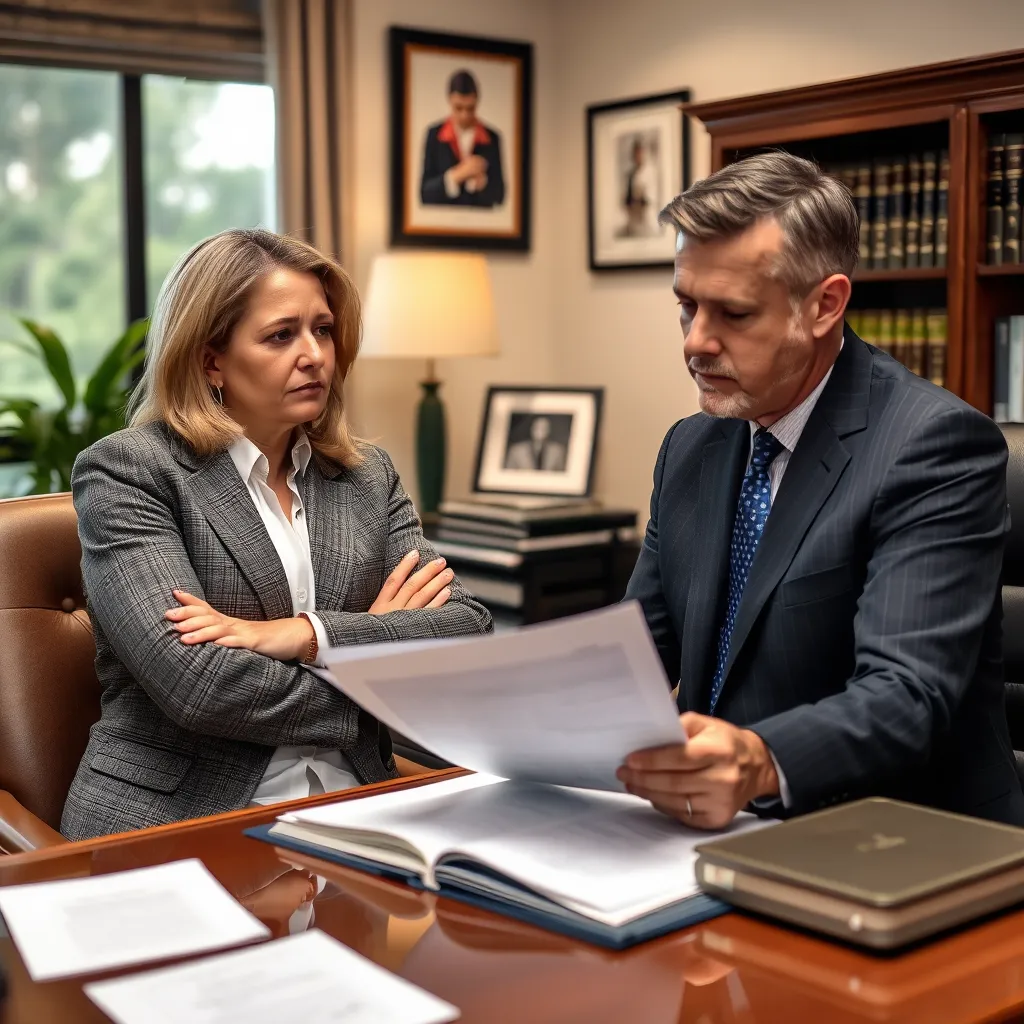
Alimony Modification Lawyer Chesapeake, VA
When a court-ordered spousal support obligation no longer reflects the financial reality of either party, Virginia law provides a mechanism to seek modification. In Chesapeake, petitions to increase, decrease, or terminate alimony are heard in the Chesapeake Circuit Court, which has jurisdiction over divorce, equitable distribution, and spousal support matters. Mr. Sris and the firm’s Of Counsel attorneys at Law Offices Of SRIS, P.C. represent clients in alimony modification proceedings throughout the Hampton Roads region, drawing on decades of family law experience. Whether you are paying or receiving support, a change in a party’s income, employment status, health, or other material circumstances may warrant review of the existing order. The firm works to present a complete factual record and to advocate for an outcome that reflects the current circumstances. To discuss your situation with an experienced family law attorney, contact Law Offices Of SRIS, P.C. at (888) 437-7747. Law Offices Of SRIS, P.C. – Advocacy Without Borders.
What Alimony Modification Means in Chesapeake, Virginia
Virginia spousal support is governed by the factors set out in Va. Code § 20-107.1, which the court applies when establishing an initial award. Once in place, an alimony order is not necessarily permanent. Under Va. Code § 20-109, a party may petition the court to modify support upon a showing of a material change in circumstances that was not in the contemplation of the court when the original order was entered. The Chesapeake Circuit Court, located at 307 Albemarle Drive, has exclusive original jurisdiction over all suits for divorce and related support matters. Separate custody and child support petitions proceed in the Chesapeake Juvenile and Domestic Relations District Court, but any modification of spousal support connected to a divorce is litigated in the Circuit Court. The judge applies the same statutory factors used at the initial determination—including each spouse’s earning capacity, reasonable needs, and the standard of living established during the marriage—but through the lens of whether those circumstances have materially shifted.
A material change might include a significant involuntary reduction in the payor’s income, a substantial increase in the recipient’s income, a change in either party’s health that affects employability, or the occurrence of events that alter the parties’ financial obligations. The party seeking modification bears the burden of demonstrating the change by a preponderance of the evidence. Modifications can be temporary, adjusting support for a finite period while a spouse completes retraining after a job loss, or permanent, reflecting a new baseline that the parties will follow. The process often involves financial discovery, documentation of income and expenses, and—when a negotiated resolution is not reached—an evidentiary hearing where the court evaluates the evidence. Mr. Sris and the firm’s Of Counsel attorneys work with clients to identify the changes that are legally sufficient under Virginia law and to present a credible narrative supported by verified financial information.
How Mr. Sris and the Firm’s Of Counsel Attorneys Handle Alimony Modification Cases
Every modification begins with a careful assessment of the facts. During an initial consultation, the firm’s attorneys review the existing support order, the circumstances that have allegedly changed, and the client’s objectives. Because the legal standard requires more than a simple desire to pay less or receive more, the firm focuses on isolating verifiable changes—new income figures, tax returns, pay stubs, medical documentation, or revised budgets—that demonstrate how the economic landscape has shifted since the last order. The firm’s multi-state experience provides perspective, but its analysis is rooted specifically in Virginia law and the practices of the Chesapeake Circuit Court.
Once a viable modification basis is identified, the firm’s attorneys prepare and file the petition with the court, serve the opposing party, and engage in discovery to obtain the other side’s financial records. Many modifications are resolved through negotiation, particularly when both parties recognize that an existing order has become unworkable. The firm’s attorneys are prepared to advocate for an agreed order that the court can enter by consent. If a settlement cannot be reached, the matter proceeds to a hearing. The court schedules the hearing on its calendar; the firm’s attorneys prepare witnesses, exhibits, and legal arguments tailored to the statutory factors. Throughout the process, the firm communicates candidly about the strengths and weaknesses of the case so that the client can make informed decisions about whether to settle or proceed to trial.
About Mr. Sris and the Firm’s Of Counsel Attorneys
Mr. Sris is the Owner and Founder of Law Offices Of SRIS, P.C. A former prosecutor, he has practiced family law and litigation since founding the firm in 1997. His background includes testimony before the Virginia House Courts of Justice Committee in support of 2019 HB 635 (chief patron Del. David Bulova). Mr. Sris is admitted to practice in Virginia, Maryland, the District of Columbia, New Jersey, and New York, and he concentrates his practice on complex family and criminal matters. He maintains personal involvement in case strategy, working alongside the firm’s Of Counsel attorneys to develop arguments that are grounded in the specific statutory factors Virginia courts apply.
The firm’s Of Counsel attorneys bring extensive combined legal experience. Collectively, they have handled matters across a range of family law issues, including spousal support modifications, divorce, equitable distribution, and custody disputes. Their litigation experience equips them to evaluate financial documents, challenge unsupported claims, and present persuasive evidence at hearing. The firm’s Richmond location serves clients throughout the Hampton Roads region, including Chesapeake, and the firm’s attorneys regularly appear in the Chesapeake Circuit Court and the Chesapeake Juvenile and Domestic Relations District Court. Results may vary.
Frequently Asked Questions
What is required to modify alimony in Virginia?
To modify alimony in Virginia, a party must show a material change in circumstances since the last support order. The change must not have been within the contemplation of the court when the original order was entered. Examples include a significant involuntary reduction in the payor’s income, a substantial increase in the recipient’s income, a change in either party’s health, or a change in the parties’ financial obligations. The party seeking modification bears the burden of proof. The court applies the factors listed in Va. Code § 20-107.1 to the current circumstances. For guidance on your specific situation, reach Law Offices Of SRIS, P.C. at (888) 437-7747.
Where is an alimony modification petition filed in Chesapeake?
Alimony modification petitions in Chesapeake are filed in the Chesapeake Circuit Court at 307 Albemarle Drive. The Circuit Court has exclusive original jurisdiction over divorce and spousal support matters. The Chesapeake Juvenile and Domestic Relations District Court handles standalone custody, visitation, and child support petitions but does not adjudicate modifications of spousal support connected to a divorce decree. The firm’s attorneys prepare and file the petition in the proper court and serve the opposing party. To discuss the details of your matter, contact Law Offices Of SRIS, P.C. at (888) 437-7747.
Can the court modify alimony if the payor retires?
Retirement may constitute a material change in circumstances warranting modification of alimony. Virginia courts consider whether the retirement was reasonable, voluntary, or expected at the time of the original order, as well as the impact on the payor’s income and the recipient’s need. The court will evaluate the payor’s age, health, work history, and retirement benefits. If the retirement is found to be in good faith and not an attempt to avoid support, the court may reduce or terminate the obligation. For a consultation, reach Mr. Sris and the firm’s Of Counsel attorneys at (888) 437-7747.
What if the recipient begins cohabiting?
Cohabitation by the alimony recipient in a relationship analogous to marriage may support a motion to terminate or modify support. Virginia law presumes that spousal support terminates upon the remarriage of the recipient, but cohabitation does not automatically end the obligation. The payor must show that the recipient is cohabiting in a relationship that provides ongoing financial benefits, such as shared housing expenses or joint income. The court examines the nature of the relationship and its effect on the recipient’s financial need. Evidence of shared residence, joint accounts, or mutual household expenses is relevant. To discuss your specific circumstances, contact Law Offices Of SRIS, P.C. at (888) 437-7747.
How does the court calculate the new support amount?
The court calculates a modified alimony amount by applying the statutory factors in Va. Code § 20-107.1 to the parties’ current financial circumstances. Those factors include each spouse’s earning capacity, reasonable needs, age, health, the duration of the marriage, the standard of living during the marriage, and any contributions to the other spouse’s education or career. The court determines the payor’s ability to pay and the recipient’s need in light of the changed circumstances. The new support order may be temporary or permanent, depending on the nature of the change. For guidance on how these factors may apply to your case, reach Law Offices Of SRIS, P.C. at (888) 437-7747.
Do I need a lawyer to modify alimony in Chesapeake?
You are not required to hire a lawyer to file an alimony modification petition, but an attorney can assist in presenting a strong case. Modification proceedings involve proving a material change in circumstances, marshaling financial evidence, and satisfying the burden of proof. An attorney’s experience with the Chesapeake Circuit Court, discovery procedures, and the presentation of income documentation can help ensure your petition is complete and persuasive. The firm’s attorneys work with clients to develop a coherent narrative supported by verified financial records. To schedule a consultation, contact Law Offices Of SRIS, P.C. at (888) 437-7747.
Related family law representation:
- Fairfax County Family Law Lawyers
- Prince William County Family Law Lawyers
- Fairfax City Family Law Lawyers
Additional resources:
Attorney advertising. Prior results do not guarantee a similar outcome.
Results may vary.
Case results depend on a variety of factors unique to each case.