
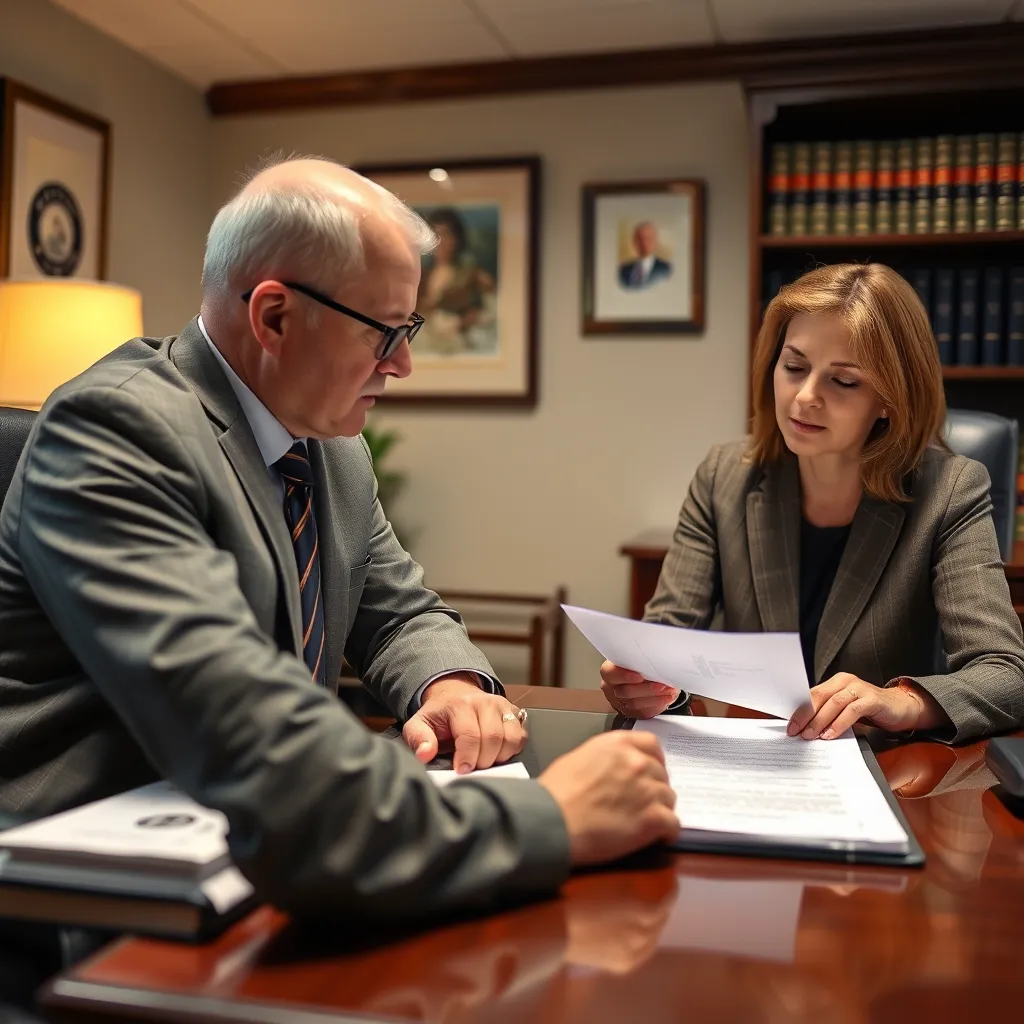
Armed Forces Divorce Lawyer Suffolk, VA
Military families in Suffolk, Virginia, face unique challenges when a marriage ends. Service members stationed at nearby installations, including Joint Base Langley-Eustis and Naval Station Norfolk, often deal with deployment schedules, military pension division, and custody arrangements that cross state and international boundaries. The Suffolk Circuit Court and Suffolk Juvenile and Domestic Relations District Court hear divorce, equitable distribution, and custody matters in the Fifth Judicial District. Mr. Sris and his Of Counsel represent service members, military spouses, and retirees through every stage of an armed forces divorce, from filing the initial complaint to finalizing the decree. The firm handles the federal and state law issues that set military divorce apart, including the Uniformed Services Former Spouses’ Protection Act and the Servicemembers Civil Relief Act. To speak with an attorney about your situation, contact Law Offices Of SRIS, P.C. at (888) 437-7747. Law Offices Of SRIS, P.C. – Advocacy Without Borders.
What to Know About Armed Forces Divorce in Suffolk, Virginia
Virginia is an equitable distribution state, meaning marital property is divided fairly—but not necessarily equally—under Va. Code § 20‑107.3. In a military divorce, one of the most significant assets is often the service member’s military pension, which is subject to division under the Uniformed Services Former Spouses’ Protection Act (USFSPA). To divide the pension, the final decree must include specific language, and the former spouse must meet the “10/10 rule” for direct payment from the Defense Finance and Accounting Service. Additional assets such as the Thrift Savings Plan, military health care benefits, and survivor benefit plan coverage also require careful handling. Grounds for divorce in Virginia include no-fault separation of six months (if no minor children and the parties have a signed agreement) or one year, as well as fault grounds like adultery, cruelty, and desertion.
Child custody and visitation in Suffolk are determined by the best interests of the child under Va. Code § 20‑124.3, and deployment can complicate those arrangements. A temporary custody order may be needed during a parent’s absence, and the Servicemembers Civil Relief Act (SCRA) can stay proceedings if military duties prevent the service member from participating. Our Richmond Location represents clients at the Suffolk courts, and Mr. Sris and his Of Counsel work to resolve these matters efficiently while protecting parental rights and financial interests. Results may vary. In your case.
Frequently Asked Questions
How long does a divorce take in Suffolk, Virginia?
An uncontested divorce in Virginia may resolve in two to six months after filing, depending on the mandatory separation period and the court’s calendar. For a no-fault divorce, the parties must be separated for six months if no minor children are involved and they have a signed separation agreement, or one year in other cases. Contested divorces, particularly those involving military pension division or custody disputes, frequently take nine to eighteen months. The Suffolk Circuit Court schedules hearings according to its docket, and complex equitable distribution can extend the timeline. Cases with an active-duty service member stationed overseas may require additional time for service of process and jurisdictional determinations. To discuss the timeline for your specific situation, reach Law Offices Of SRIS, P.C. at (888) 437-7747.
How much does a divorce cost in Suffolk, Virginia?
The Circuit Court filing fee for a divorce complaint is approximately, and additional costs such as service of process and mediation fees vary by case. In Suffolk, sheriff service of process costs about $12, while a private process server may charge $50 to $100. If custody is contested, a Guardian ad Litem may be appointed, and fees can range from $500 to over $2,500. Mediation, which is available but not mandatory, typically costs $100 to $300 per hour per party. Overall legal fees depend on whether the divorce is uncontested or contested and whether military benefits, business valuations, or other complex assets are involved. For a consultation about your case, contact Law Offices Of SRIS, P.C. at (888) 437-7747.
Is Virginia a community property state?
No, Virginia is an equitable distribution state, not a community property state. Under Va. Code § 20‑107.3, the court divides marital property fairly after considering eleven statutory factors such as the length of the marriage, each spouse’s contributions, and the circumstances experienced to the divorce. Separate property—assets owned before the marriage or received as a gift or inheritance—is not subject to division. In a military divorce, the classification of the military pension, VA disability benefits, and Thrift Savings Plan contributions can be complex. The Suffolk Circuit Court handles all property division matters; the court’s decision will be based on the specific facts of the case rather than a rigid 50/50 split.
How is child custody decided in Suffolk, Virginia?
In Suffolk, child custody is determined according to the best interests of the child under Va. Code § 20‑124.3, which lists ten factors the court must evaluate. Those factors include the child’s age, each parent’s role, the child’s relationship with each parent, and any history of abuse. For military families, deployment can influence custody arrangements; a parent’s active-duty status does not automatically bar them from having custody, but the court may order a temporary custody arrangement during deployment. The Suffolk Juvenile and Domestic Relations District Court handles standalone custody cases, while custody matters within a divorce are heard by the Suffolk Circuit Court. Courts also encourage parenting plans that address the service member’s schedule. For guidance on your custody situation, contact Law Offices Of SRIS, P.C. at (888) 437-7747.
What are the grounds for divorce in Virginia?
Virginia allows both no-fault and fault-based grounds for divorce. No-fault grounds require living separate and apart for one year, or only six months if the parties have no minor children and have entered into a written separation agreement. Fault grounds include adultery (which has no mandatory waiting period), cruelty, willful desertion or abandonment for one year, and conviction of a felony with imprisonment of more than one year. For military personnel, the residency requirement—six months’ domiciliary residency in Virginia—must also be met before filing. The divorce complaint is filed in the Suffolk Circuit Court. An attorney can help determine which ground best fits your circumstances and whether military-specific defenses such as the SCRA apply. For a consultation, reach Mr. Sris and his Of Counsel at (888) 437-7747.
How does deployment affect child custody in Virginia?
Virginia law does not allow a court to permanently change custody solely because a parent is deployed, but a temporary custody order may be entered for the duration of the deployment. Under Va. Code § 20‑124.7, a service member’s deployment cannot be the only factor used to modify a permanent custody order. The court may issue a temporary order that grants custody to the non-deploying parent or another family member, with a provision for the deploying parent to resume custody upon return. The parties are encouraged to include a deployment plan in their parenting agreement. The Suffolk Juvenile and Domestic Relations District Court handles custody modifications during a parent’s military service. To address your specific deployment-related custody questions, contact Law Offices Of SRIS, P.C. at (888) 437-7747.
How are military pensions divided in a Virginia divorce?
Military pensions are treated as marital property under Virginia’s equitable distribution statute and can be divided by the court, but federal law imposes specific requirements. The Uniformed Services Former Spouses’ Protection Act allows state courts to divide disposable retired pay, provided the final decree contains the language needed for direct payment by DFAS. The former spouse must have been married to the service member for at least ten years overlapping ten years of creditable military service (the “10/10 rule”) to receive direct payments. The Suffolk Circuit Court will determine the marital share of the pension and the percentage each spouse receives, consistent with the 2019 revision to Va. Code § 20‑107.3. Mr. Sris and his Of Counsel ensure that pension division orders are properly drafted to avoid enforcement problems later. Results may vary.
Does the Servicemembers Civil Relief Act apply to divorce in Virginia?
Yes, the Servicemembers Civil Relief Act (SCRA) can apply to divorce proceedings in Virginia, primarily by staying—or temporarily pausing—the case if the service member’s military duties materially affect their ability to participate. The service member must request the stay and provide evidence showing how service impairs their ability to appear in court. The stay is typically for at least 90 days and can be extended. The SCRA also provides protections regarding default judgments and service of process. It does not permanently stop a divorce; it only delays the proceedings. The Suffolk Circuit Court applies the SCRA when a service member is on active duty and unable to attend hearings. For a consultation about your SCRA rights, reach Law Offices Of SRIS, P.C. at (888) 437-7747.
What if a service member is stationed overseas during a divorce?
A service member stationed overseas can still be divorced in Virginia if the state’s residency and jurisdictional requirements are met, but service of process and participation in court hearings can be more complicated. The spouse filing for divorce must comply with the Hague Service Convention if the service member is in a signatory country, or seek alternative service through the court if direct service is not feasible. The SCRA may also apply to stay proceedings. If the service member consents to jurisdiction and waives personal service, the divorce can proceed more quickly. The Suffolk Circuit Court can grant a divorce on the grounds permitted by Virginia law regardless of the service member’s location. For guidance on these procedural issues, contact Law Offices Of SRIS, P.C. at (888) 437-7747.
Can a civilian spouse file for divorce in Virginia if the service member is stationed elsewhere?
Yes, a civilian spouse may file for divorce in Virginia if either the civilian spouse or the service member has been a bona fide resident and domiciliary of Virginia for at least six months before filing. If the service member is stationed in another state or overseas but maintains Virginia as their domicile, the Virginia court has jurisdiction. The civilian spouse must file the complaint in the circuit court of the city or county where either party resides—for example, the Suffolk Circuit Court if one party lives in Suffolk. Service of process must be accomplished on the service member, which may involve forwarding the papers through military channels or the Hague Service Convention. An experienced armed forces divorce lawyer can help ensure proper service and move the case forward. To discuss your filing options, reach Mr. Sris and his Of Counsel at (888) 437-7747.
About Mr. Sris and His Of Counsel Team
Mr. Sris, Owner and Founder of Law Offices Of SRIS, P.C., has practiced family law since 1997 and is admitted in Virginia, Maryland, the District of Columbia, New Jersey, and New York. His background as a former prosecutor gives him perspective on litigation strategy, and his experience with complex property division—including military benefits—helps clients understand their financial landscape. Mr. Sris testified before the Virginia House Courts of Justice Committee in support of 2019 HB 635 (chief patron Del. David Bulova), a bill that revised the equitable distribution statute. Mr. Sris and his Of Counsel bring extensive combined legal experience. Results may vary. The firm’s Richmond Location represents clients at the Suffolk courts and throughout Virginia with the goal of achieving a fair resolution in each case.
For more information, see our related locations:
Family Law Lawyer Fairfax County, VA |
Family Law Lawyer Prince William County, VA |
Family Law Lawyer Manassas, VA
Attorney advertising. Prior results do not guarantee a similar outcome.
Case results depend on a variety of factors unique to each case.
Results may vary.