
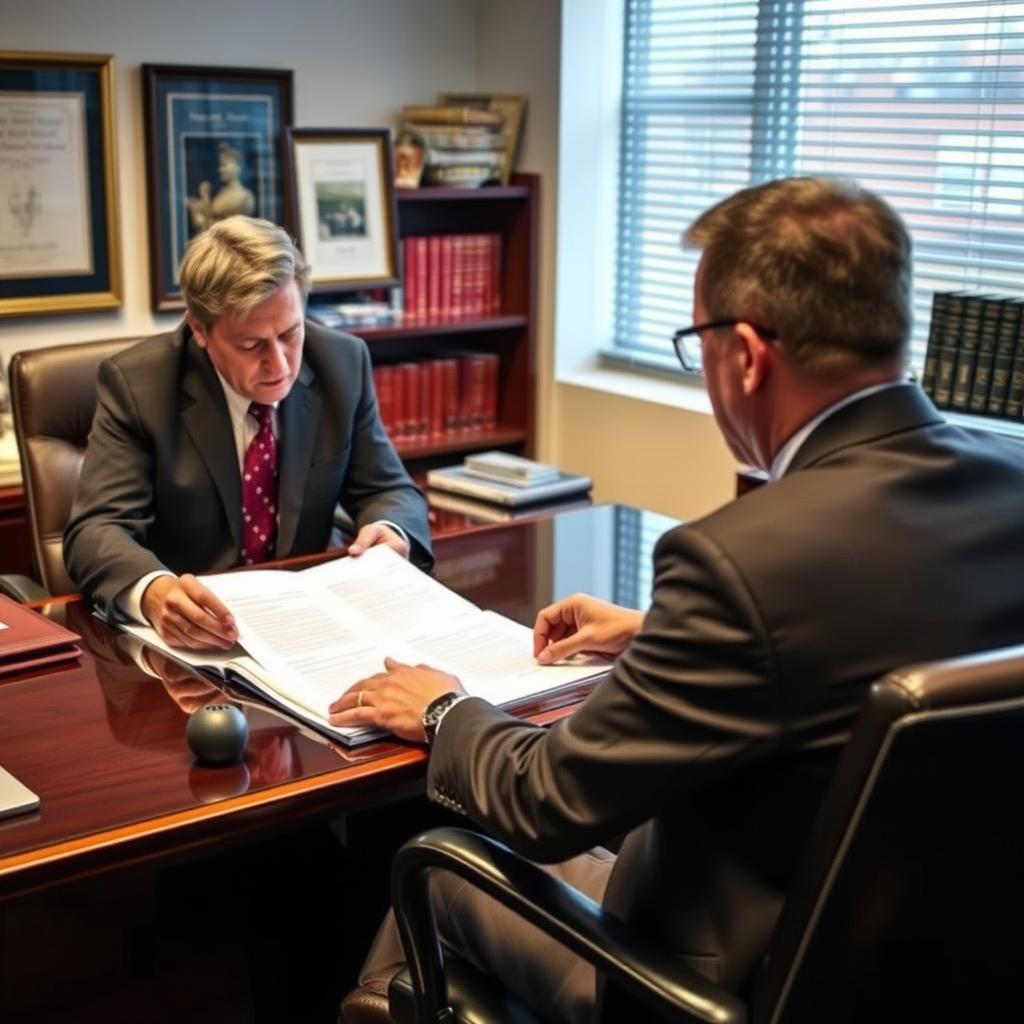
Destruction or Falsification of Records lawyer Virginia Beach, VA
Federal agents have contacted you about a business investigation, a grand jury subpoena for company records, or financial documents you may have altered or deleted. You are now facing the possibility of a federal charge for destruction or falsification of records—a serious offense prosecuted in U.S. District Court. In these situations, an experienced federal criminal defense attorney is essential. At Law Offices Of SRIS, P.C., Mr. Sris represents individuals and businesses across Virginia, including Virginia Beach, in federal record‑tampering and obstruction matters. With decades of litigation experience, he carefully examines the government’s evidence, challenges the prosecution’s narrative of intent, and works toward a favorable resolution. To request a consultation, call (888) 437‑7747. Law Offices Of SRIS, P.C. — Advocacy Without Borders.
Defense Strategies for Federal Record-Tampering Allegations
Federal destruction or falsification of records charges often arise under statutes such as 18 U.S.C. § 1503 and § 1512, covering obstruction of investigations and related offenses. Whether the government alleges you knowingly shredded, deleted, or altered business, financial, or government records, the prosecution must prove beyond a reasonable doubt that you acted with corrupt intent. Mr. Sris evaluates every element of the government’s case, scrutinizing the circumstances surrounding the allegedly altered records, the custody and chain‑of‑custody of digital or physical documents, and whether any amendment or deletion was part of routine business practice rather than a willful act to impede an investigation.
A defense strategy may also involve challenging the scope of the investigation, negotiating with federal prosecutors before an indictment is returned, or presenting mitigating facts that demonstrate an absence of criminal intent. In many cases, early intervention by experienced counsel can lead to a narrower charge, a favorable plea agreement, or, in appropriate circumstances, a pretrial resolution that avoids a public trial altogether. Each case is different; Mr. Sris and his team tailor their approach to the specific facts and procedural posture of your situation.
What to Expect When Facing Federal Destruction of Records Charges in Virginia Beach
In the Eastern District of Virginia, which includes the Norfolk and Newport News divisions serving Virginia Beach, a federal investigation typically begins with contact from special agents of the FBI, DEA, IRS Criminal Investigation, or other federal agencies. If a grand jury returns an indictment, you will appear before a U.S. Magistrate Judge for an initial appearance and detention hearing. Your attorney will then engage in the discovery process, reviewing the evidence the government intends to use and filing pretrial motions to challenge the admissibility of records or statements. Throughout this process, Mr. Sris provides candid, reasoned guidance on whether to negotiate a resolution or proceed to trial.
Federal court procedure is markedly different from state court. There is no preliminary hearing; instead, felonies proceed by indictment. The Speedy Trial Act imposes general deadlines, but excludable delays—such as those requested by the defense for motion practice—can extend the timeline. Sentencing in the federal system is governed by the U.S. Sentencing Guidelines, which the court considers alongside other factors after the Supreme Court’s decision in United States v. Booker. Because the federal system abolished parole in 1987, any term of imprisonment will be served almost entirely in custody, with only limited good‑time credit. Results may vary.
Potential Consequences of a Federal Record-Tampering Conviction
A conviction for destruction or falsification of records carries significant penalties, including imprisonment, substantial fines, and a term of supervised release. Under federal law, the exact sentence depends on numerous factors: the specific statute charged, the defendant’s role in the offense, the value of the records, and the presence of any aggravating circumstances such as obstruction of an ongoing investigation or bankruptcy proceeding. Because federal judges retain discretion after Booker, the range advised by the Sentencing Guidelines is important but not determinative. An experienced defense attorney works to present mitigating facts—such as lack of criminal history, acceptance of responsibility, or the absence of personal gain—that may support a sentence below the advisory range.
In addition to incarceration and fines, a federal felony record can affect employment, professional licensing, and immigration status. For businesses, allegations of record falsification can trigger collateral consequences, including government contracting debarment or civil enforcement actions. Mr. Sris considers all these dimensions when advising clients and building a comprehensive defense strategy.
About Your Federal Criminal Defense Team
Mr. Sris, Owner and Founder of Law Offices Of SRIS, P.C., is a former prosecutor who has practiced federal criminal defense since 1997. Admitted in Virginia, Maryland, the District of Columbia, New Jersey, and New York, he draws on extensive experience in federal courtrooms, understanding how the U.S. Attorney’s Office builds its cases and where investigative or charging weaknesses may lie. Mr. Sris testified before the Virginia House Courts of Justice Committee in support of 2019 HB 635 (chief patron Del. David Bulova). He keeps a focused caseload to ensure each client receives thorough, strategic attention.
The firm’s attorneys have over 120 years of combined legal experience and have achieved over 4,739 documented firm-wide results. Results may vary.
Frequently Asked Questions
What constitutes destruction or falsification of records under federal law?
Federal destruction or falsification of records involves knowingly altering, destroying, or concealing documents with intent to impede a federal investigation, bankruptcy proceeding, or the administration of a government matter. The charge often arises under obstruction statutes such as 18 U.S.C. § 1503 and § 1512. The government must show that you knew of a pending or foreseeable federal matter and acted with corrupt intent. Even deleting digital files or shredding paper records can support a charge if the intent element is met. An experienced attorney evaluates whether the government can prove both the act and the requisite intent.
Do I need a lawyer if federal agents contact me about records?
You should immediately assert your right to counsel and decline to speak with federal agents until you have consulted an attorney. Federal investigators often approach witnesses or targets informally. Statements made without counsel may be used later to establish knowledge or intent. Mr. Sris can contact the investigators on your behalf, determine whether you are a subject or target of the investigation, and advise you on how to proceed without inadvertently incriminating yourself. Early attorney involvement is critical to protecting your rights.
Can I be charged with destruction of records if I accidentally deleted a document?
Accidental deletion does not satisfy the intent element required for a federal record-tampering charge; the government must prove you acted knowingly and with corrupt intent. However, federal prosecutors may view the circumstances surrounding the deletion—such as its timing in relation to a subpoena—as evidence of willfulness. Your defense may focus on demonstrating routine document‑retention policies, showing that the deletion was made in the ordinary course of business, or establishing that you had no knowledge of a pending investigation at the time the record was destroyed. An attorney can help marshal this evidence early.
How does a federal criminal case in Virginia Beach begin?
Most federal destruction-of-records cases begin with an investigation by a federal agency such as the FBI or IRS‑CI, followed by a grand jury indictment in the U.S. District Court for the Eastern District of Virginia. After the indictment, an initial appearance and detention hearing take place before a magistrate judge. Your attorney then begins reviewing the government’s discovery, filing motions to suppress evidence if appropriate, and negotiating with the Assistant U.S. Attorney. If a plea agreement cannot be reached, the matter proceeds to trial before a district judge. The timeline varies significantly depending on the complexity of the case and motion practice.
What should I look for in a federal criminal defense attorney?
You want an attorney who is experienced in federal court, understands the U.S. Sentencing Guidelines, and has a track record of challenging federal investigations and evidence. Look for a lawyer admitted to practice in the relevant federal district, familiar with the local rules and judges, and able to present a compelling narrative to both prosecutors and, if necessary, a jury. Mr. Sris’s former‑prosecutor background and extensive trial experience provide a multifaceted perspective on how the government constructs its case and where the defense can push back effectively. To discuss your situation with an experienced federal defense team, call (888) 437‑7747.
Can federal record-tampering charges be dismissed or reduced?
Yes—charges may be dismissed or reduced if the government’s evidence of intent is weak, if the records were not within federal jurisdiction, or if constitutional violations occurred during the investigation. Pretrial motions may challenge the legality of a search warrant or the admissibility of statements. In some instances, demonstrating that the records were destroyed pursuant to a routine retention policy or that the defendant lacked knowledge of the federal proceeding can lead the prosecutor to drop or reduce the charge. Each case is unique, and an attorney should evaluate the specific facts before predicting any outcome. Results may vary.
Will I go to jail if convicted of destroying federal records?
Federal destruction-of-records convictions can result in imprisonment, but the length of any sentence depends on numerous factors, including the specific statute, the defendant’s criminal history, and the amount of loss or obstruction caused. Because the federal system lacks parole, any prison term must be served in custody with only limited good‑time credit. However, an experienced attorney may be able to advocate for alternatives such as probation or a sentence at the low end of the advisory guideline range, especially where mitigating circumstances exist.
How do federal sentencing guidelines apply to record-tampering offenses?
The U.S. Sentencing Guidelines provide an advisory range for the judge to consider, calculated based on the offense level, specific offense characteristics, and the defendant’s criminal history. For destruction‑of‑records offenses, factors such as whether the offense involved obstruction of an investigation, the number of altered documents, and the intended loss amount can increase the offense level. After Booker, judges may impose a sentence outside the guideline range if supported by valid reasons. Your attorney can present mitigating evidence to argue for a variance below the advisory range.
What if the records at issue are digital or electronic?
Digital records—emails, databases, cloud‑stored documents—are treated the same as physical records under federal obstruction and record‑tampering statutes. Deletion, modification, or concealment of digital data can form the basis of a charge just as physical document destruction does. However, digital cases often involve forensic analysis of metadata, backup systems, and user‑activity logs. The defense may be able to show that data was automatically overwritten, that third parties had access, or that the government’s forensic interpretation is flawed. An attorney experienced in challenging complex digital evidence is essential in such cases.
How soon should I contact an attorney if I suspect I am under investigation?
You should contact a federal criminal defense lawyer as soon as you become aware of an investigation, as early intervention can significantly affect the direction of the case. Prompt legal representation allows counsel to contact the prosecutors before an indictment, influence charging decisions, preserve favorable evidence, and begin building your defense while memories and records are fresh. Delaying may limit your options. To request a consultation with Mr. Sris, call (888) 437‑7747.
Related federal criminal defense locations:
Fairfax County ·
Fairfax City ·
Falls Church ·
Prince William County ·
Manassas
Federal court and code resources:
U.S. District Court, Eastern District of Virginia ·
Title 18, U.S. Code (Crimes and Criminal Procedure) ·
U.S. Sentencing Commission Guidelines
Attorney advertising. Prior results do not guarantee a similar outcome. Case results depend on a variety of factors unique to each case. Results may vary.
© 1997–2026 Law Offices Of SRIS, P.C.