
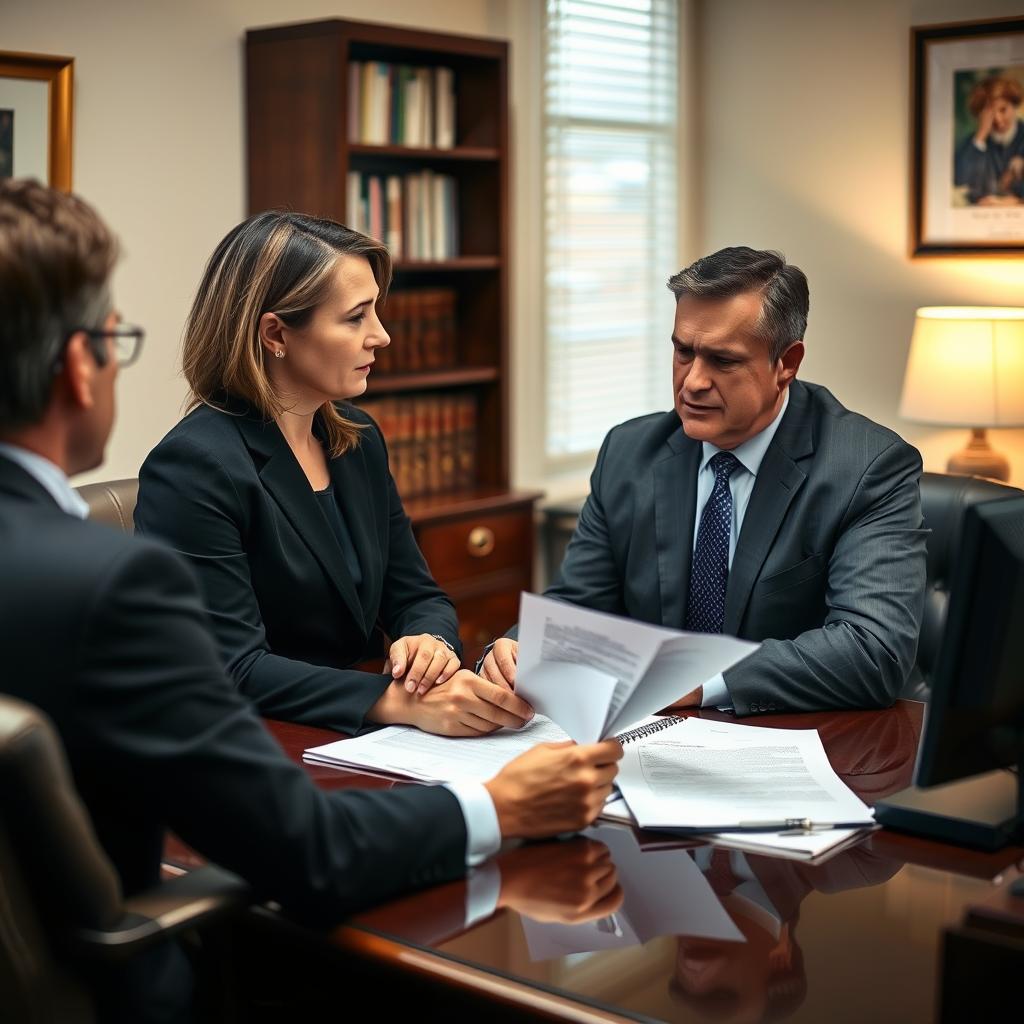
Failure to Register as a Sex Offender lawyer Poquoson, VA
Failure to register as a sex offender under federal law carries significant consequences, including mandatory minimum imprisonment, lifetime registration obligations, and supervision requirements that extend well beyond a typical state sentence. In Poquoson, Virginia, and surrounding communities within the Eastern District of Virginia, individuals facing these charges are prosecuted by the United States Attorney’s Office. Federal conviction rates exceed 90%, and there is no parole in the federal system. When the stakes involve the loss of liberty and permanent sex-offender registration, experienced guidance is critical. Mr. Sris and his Of Counsel concentrate a portion of their federal criminal defense practice on matters arising in Poquoson and the broader Hampton Roads region. Reach Law Offices Of SRIS, P.C. at (888) 437‑7747 to request a consultation. Law Offices Of SRIS, P.C. — Advocacy Without Borders.
What Failure to Register as a Sex Offender Means in Poquoson
Under federal law, the obligation to register as a sex offender travels with a person across state lines, and a conviction for failing to register triggers prosecution in the federal district that includes the place of residence or travel. For residents of Poquoson, that means the U.S. District Court for the Eastern District of Virginia. This court sits in several divisions — Alexandria, Richmond, Norfolk, and Newport News — and handles all federal criminal matters arising on the Virginia Peninsula. The statute most often charged in these cases is 18 U.S.C. Section 2250, which requires proof that the accused was required to register under the Sex Offender Registration and Notification Act, that they traveled in interstate or foreign commerce, and that they knowingly failed to register or update a registration as required.
Poquoson, an independent city bordered by the Chesapeake Bay and York County, falls within the Newport News division of the Eastern District. Federal agents from the United States Marshals Service, the FBI, or other federal agencies typically investigate failure‑to‑register allegations, often in conjunction with local law enforcement. Because federal prosecution is separate from any potential state proceeding, an individual may face federal charges even if state charges are pending or have been resolved. Mr. Sris and his Of Counsel appear regularly in the Eastern District of Virginia and are familiar with the procedural expectations and sentencing practices in that venue.
How Mr. Sris and His Of Counsel Handle Federal Failure‑to‑Register Cases
The defense of a federal failure‑to‑register charge begins with an exacting review of the government’s evidence. Prosecutors must establish each element beyond a reasonable doubt, including the interstate‑commerce nexus and the accused’s knowledge of the registration duty. Mr. Sris and his Of Counsel scrutinize whether the registration obligation was actually triggered under the applicable state or tribal law, whether the accused received the required notice, and whether any exception or mistake‑of‑fact defense applies. They also examine whether the initial classification that created the duty to register withstands constitutional or procedural challenge.
Federal cases move under the Speedy Trial Act and the Federal Rules of Criminal Procedure, so early intervention is important. After an initial appearance and a detention hearing, the court sets a schedule for discovery, motions, and trial. Mr. Sris and his Of Counsel assess the strength of the evidence, develop a litigation strategy, and negotiate with the Assistant United States Attorney assigned to the case when a resolution short of trial may be in the client’s interest. If the case proceeds to trial, the team prepares a defense that challenges the government’s proof on each element, including through motions to suppress evidence obtained in violation of constitutional protections.
About Mr. Sris and His Of Counsel Team
Mr. Sris is the Owner and Founder of Law Offices Of SRIS, P.C. A former prosecutor, he founded the firm in 1997 and has practiced in federal courts across five states. He is admitted in Virginia, Maryland, the District of Columbia, New Jersey, and New York. His work includes defending clients against a wide range of federal charges, including failure‑to‑register indictments, in the Eastern District of Virginia. Mr. Sris testified before the Virginia House Courts of Justice Committee in support of 2019 HB 635 (chief patron Del. David Bulova).
Alongside Mr. Sris, the firm’s Of Counsel — engaged through Excella — bring over 120 years of combined legal experience and have achieved 4,739+ documented firm-wide results. Results may vary. Their collective background includes service as a former Maryland prosecutor, a former Virginia State Trooper, and decades of trial practice in state and federal courts. The team’s collaborative approach enables thorough case assessment and strategic planning for each matter. Mr. Sris and his Of Counsel serve clients throughout Poquoson, York County, and the broader Hampton Roads area from the firm’s Richmond location by appointment. In any individual case.
Frequently Asked Questions
What is the difference between state and federal charges for failing to register as a sex offender?
Federal charges for failing to register as a sex offender are prosecuted by the U.S. Attorney with generally harsher penalties and no parole. An experienced federal defense attorney is critical because the federal system operates under the U.S. Sentencing Guidelines and the Federal Rules of Criminal Procedure. In Virginia, an individual may face both state and federal cases, but the federal matter is separate and carries its own set of mandatory minimums and supervised release terms that differ significantly from state consequences.
How does a Virginia lawyer defend against failure to register as a sex offender charges?
Defense strategies for failure to register as a sex offender in Virginia may include challenging the evidence, examining procedural compliance, and negotiating with prosecutors. An attorney evaluates the specific facts under federal law to build the strong $1. Common avenues include questioning whether the defendant had knowledge of the registration requirement, whether the interstate‑travel element is satisfied, and whether the underlying sex‑offense conviction properly triggers SORNA duties. Every case depends on its individual circumstances, so talk with a lawyer about your situation.
What should I do if I am facing failure to register as a sex offender charges in Virginia?
If facing failure to register as a sex offender charges in Virginia, contact a federal criminal attorney immediately. Do not discuss the case with anyone except your lawyer. Preserve all relevant documents and evidence, and avoid any communication with law enforcement unless your attorney is present. The statute of limitations and court deadlines under federal law require prompt action, and delaying can limit your defense options.
What are the penalties for failure to register as a sex offender in Virginia federal court?
Penalties for failure to register as a sex offender in federal court depend on the specific charges, prior record, and circumstances. Under the relevant federal statutes, consequences may include fines, imprisonment, supervised release following incarceration, and ongoing registration obligations. In the Eastern District of Virginia, judges apply the U.S. Sentencing Guidelines, which consider offense characteristics and criminal history. Consult a Virginia federal criminal attorney for case‑specific guidance.
Which court handles federal failure‑to‑register cases originating in Poquoson?
Federal failure‑to‑register cases originating in Poquoson are handled in the U.S. District Court for the Eastern District of Virginia, typically in the Newport News division. This court also has divisions in Alexandria, Richmond, and Norfolk. The United States Attorney’s Office for the Eastern District of Virginia prosecutes these cases, and initial appearances often take place before a federal magistrate judge.
Do I need a lawyer for federal failure to register as a sex offender in Virginia?
You are not legally required to hire a lawyer, but the complexity of federal sentencing guidelines, the lack of parole, and the severe consequences make experienced counsel essential. Federal prosecutors routinely secure conviction rates above 90%. An attorney who understands the Eastern District of Virginia can evaluate the government’s evidence, negotiate with the AUSA, and present a defense at trial or at sentencing. Having a knowledgeable advocate can be the difference between a sentence that includes mandatory minimums and one that allows the judge some flexibility.
What is the role of the U.S. Marshals in failure‑to‑register investigations?
The U.S. Marshals Service is the primary federal agency tasked with enforcing the Sex Offender Registration and Notification Act. Marshals investigate whether required registrants have updated their information and, when they find non‑compliant individuals, refer cases for federal prosecution. They often coordinate with local police departments in Poquoson and York County. Because the marshals have specialized units focused on sex‑offender compliance, their investigations can result in detailed evidence that a defense attorney must carefully examine.
Can an attorney help me update my registration before I am charged?
An attorney can advise you on how to correct a registration deficiency, but you should obtain counsel before making any statements to law enforcement. Taking action to comply with registration obligations may be a positive factor in your case, but the manner in which you do so can have legal implications. Mr. Sris and his Of Counsel can help you evaluate your situation and, when appropriate, communicate with the Marshals Service or the prosecutor’s office on your behalf.
How long does a federal criminal case take in Virginia?
The timeline for a federal criminal case in Virginia varies by the complexity of the matter and the court’s docket. Under the Speedy Trial Act, an indictment must be returned within 30 days of arrest and trial must start within 70 days of indictment, but many delays are excludable. Typical federal cases can take several months to over a year, while complex matters may last longer. Your attorney can give you a more precise estimate after reviewing the specifics of your case.
What is the statute of limitations for federal failure to register in Virginia?
Federal failure‑to‑register offenses are generally subject to a five‑year statute of limitations under 18 U.S.C. Section 3282, though the limitation period can be extended under certain circumstances, such as when the defendant is outside the United States. Because the clock starts running on the date the offense is committed, it is important to seek legal advice promptly if you believe you may be under investigation. An attorney can analyze whether a potential statute‑of‑limitations defense applies to your facts.
How much does a federal criminal lawyer cost in Virginia?
The cost of a federal criminal lawyer in Virginia depends on the complexity of the case, the stage of the proceeding, and the fee arrangement. Some attorneys charge flat fees for specific phases, while others bill hourly or require a retainer. During an initial consultation, Mr. Sris and his Of Counsel can discuss fee structures and what to expect based on your particular circumstances. There is no standard price, and the investment in experienced representation should be weighed against the potential consequences of a federal conviction.
Can federal failure‑to‑register charges be dropped in Virginia?
Federal charges may be dismissed if the evidence is insufficient, if constitutional violations occurred, or if the prosecutor exercises discretion to decline prosecution. A defense attorney can file a motion to dismiss the indictment or a motion to suppress evidence, and also engage in pre‑indictment advocacy to persuade the U.S. Attorney’s Office not to bring charges. Whether charges can be dropped depends heavily on the facts of the case and the strength of the government’s proof.
Fairfax County Federal Criminal Lawyer · Fairfax Federal Criminal Lawyer · Falls Church Federal Criminal Lawyer · Prince William County Federal Criminal Lawyer · Manassas Federal Criminal Lawyer
External resources: Virginia Code Title 13.1 · SCC business entity filings · Virginia Courts
Attorney advertising. Prior results do not guarantee a similar outcome. Case results depend on a variety of factors unique to each case. Results may vary. Attorney responsible for this advertising: Mr. Sris. Engaging Law Offices Of SRIS, P.C. Requires a signed engagement agreement.