
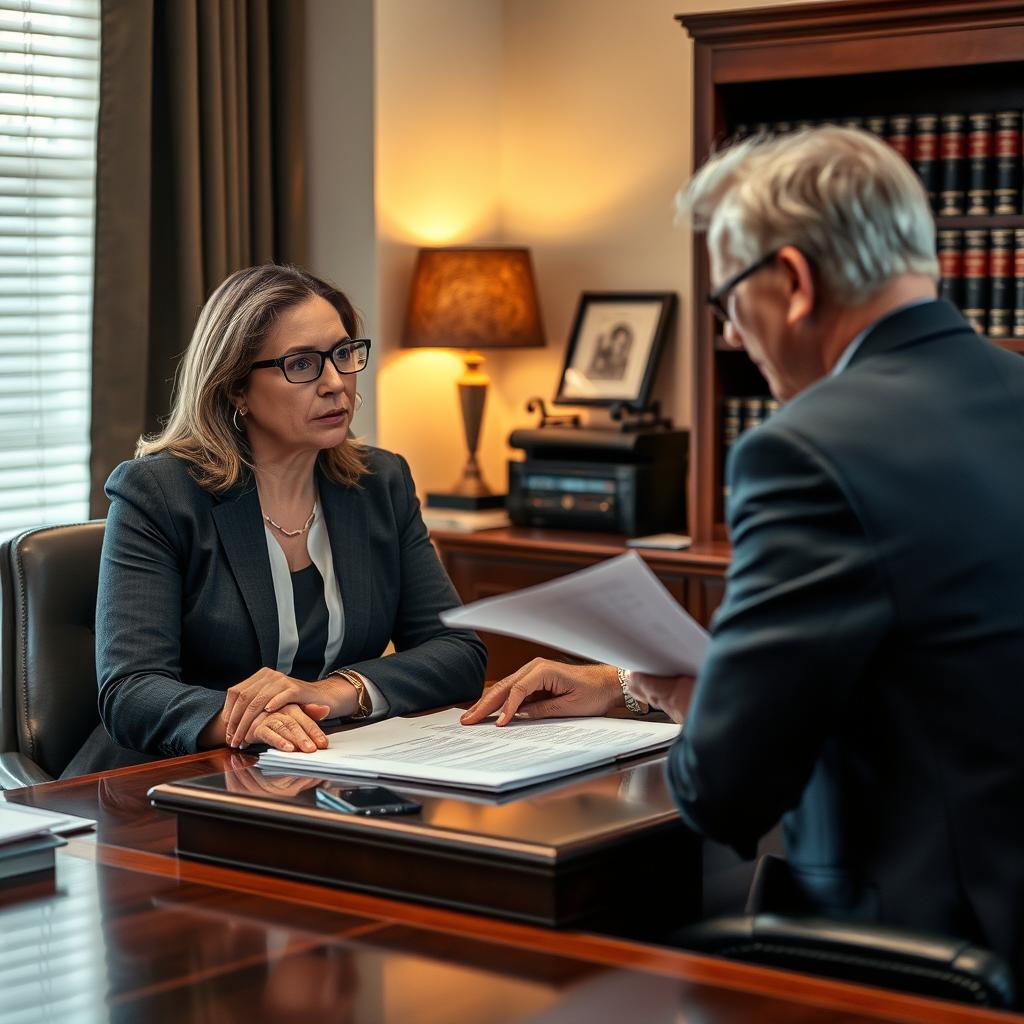
Manufacturing of Controlled Substances lawyer Suffolk, VA
Federal manufacturing-of-controlled-substances charges carry serious prison exposure, mandatory minimums, and — unlike state court — no possibility of parole. If you are under investigation or have been indicted in the U.S. District Court for the Eastern District of Virginia (EDVA) for conduct connected to Suffolk, the stakes are immediate. Federal authorities — the DEA, FBI, Homeland Security Investigations — often investigate for months before an arrest, which means a defense team needs to get involved as early as possible. Mr. Sris, Owner and Founder of Law Offices Of SRIS, P.C., is a former prosecutor who practices in federal court across Virginia, including the EDVA divisions that handle cases arising in Suffolk. He brings extensive legal experience to federal drug manufacturing cases. Reach Law Offices Of SRIS, P.C. at (888) 437‑7747 to request a consultation. Law Offices Of SRIS, P.C. – Advocacy Without Borders.
What Manufacturing of Controlled Substances Means in Suffolk, VA
“Manufacturing of controlled substances” under 21 U.S.C. § 841 covers more than a laboratory setup. The statute treats producing, preparing, propagating, compounding, converting, or processing a controlled substance — or possessing precursor chemicals with intent to manufacture — as a federal felony. Because Suffolk sits within the territorial jurisdiction of the EDVA, the U.S. Attorney’s Office in Alexandria or Richmond prosecutes these cases, and the Federal Sentencing Guidelines drive the penalties. Investigations frequently involve DEA task forces working with local agencies. If an indictment alleges manufacturing activity in the Harbour View area, downtown Suffolk, or North Suffolk, the case will typically proceed through the EDVA’s Norfolk or Newport News division. Understanding the procedural rhythm — from the initial appearance before a magistrate judge and the detention hearing to discovery under the Federal Rules of Criminal Procedure — matters early.
Suffolk’s proximity to major transportation arteries (Route 58, Route 460, and I‑664) means federal drug‑trafficking investigations often intersect with interstate commerce theories, giving the government a basis to charge manufacturing alongside conspiracy or possession with intent. The Speedy Trial Act requires an indictment within 30 days of arrest and trial within 70 days, but complex drug cases routinely involve excludable delays. The government’s case may rest on evidence gathered through Title III wiretaps, controlled buys, confidential informants, or forensic analysis of seized substances. Because federal conviction rates are high, a defense strategy built on examining the investigation’s integrity and the Sentencing Guidelines calculation is critical from the very first appearance. Mr. Sris regularly handles cases in the EDVA and is familiar with the practices of the U.S. Attorney’s Office in this district.
How Mr. Sris Handles Federal Manufacturing Cases
Federal manufacturing cases demand a dual focus: challenging the government’s evidence while preparing for the sentencing consequences baked into the Federal Sentencing Guidelines. Mr. Sris, a former prosecutor, examines the charging documents for weaknesses in the grand‑jury presentation, scrutinizes the chain of custody for any controlled substance that was seized, and assesses whether law enforcement complied with the Fourth Amendment during searches and the Fifth and Sixth Amendments during custodial questioning. He also evaluates whether the drug‑quantity determination — the single most important factor in a mandatory‑minimum sentence — is supported by reliable evidence. Mitigating circumstances, such as a minor role in the offense or acceptance of responsibility, can reduce the Guideline range, and the safety‑valve provision may allow a sentence below a statutory mandatory minimum if certain criteria are met. Results may vary.
The firm’s approach in Suffolk‑connected matters includes early engagement with the Assistant U.S. Attorney to explore whether a pretrial diversion program, a cooperation agreement under 18 U.S.C. § 3553(e) or § 5K1.1, or a plea to a lesser included offense is achievable. If the government’s case relies on cooperating witnesses, Mr. Sris tests their credibility through rigorous cross‑examination preparation. Because the EDVA frequently hears complex drug‑organization prosecutions, the defense team also prepares for the possibility of a multi‑defendant trial where severance motions may be necessary. Every step — from discovery review and suppression motions to the sentencing memorandum — is handled with the goal of protecting the client’s liberty and future.
About Mr. Sris
Mr. Sris founded Law Offices Of SRIS, P.C. in 1997 after serving as a prosecutor, and he has practiced in federal courts for decades. He is admitted in Virginia, Maryland, the District of Columbia, New Jersey, and New York. His experience includes testimony before the Virginia House Courts of Justice Committee in support of 2019 HB 635 (chief patron Del. David Bulova). He concentrates his practice on serious criminal defense and builds thorough defense strategies in federal manufacturing cases. Mr. Sris brings extensive legal experience; Results may vary.
Mr. Sris provides representation that addresses both the procedural demands of the EDVA and the substantive sentencing challenges that federal drug‑manufacturing charges present. He serves clients across Suffolk, including the Harbour View, downtown, and North Suffolk communities, from the firm’s Richmond location. Reach the firm at (888) 437‑7747.
Frequently Asked Questions
How does a Virginia lawyer defend against manufacturing of controlled substances charges?
Defense strategies for federal manufacturing charges often focus on the legality of the search, the reliability of the government’s drug‑quantity evidence, and the credibility of cooperating witnesses. An attorney may move to suppress evidence obtained through an unconstitutional search or a flawed wiretap. The defense can also challenge the scientific analysis of the alleged controlled substance and the chain of custody. In EDVA cases connected to Suffolk, Mr. Sris scrutinizes how the investigation was conducted and whether the government’s quantity determination can be contested. A successful challenge can affect the applicable mandatory minimum and the Guideline range.
What should I do if I am facing manufacturing of controlled substances charges in Virginia?
If you are facing federal manufacturing charges, do not discuss the facts with anyone except your lawyer, and contact an experienced federal criminal defense attorney as soon as possible. Preserve any documents or communications that may be relevant, but do not attempt to contact witnesses or law enforcement on your own. Federal agents may continue to seek statements even after you are represented. Mr. Sris can advise you on how to navigate the initial appearance, detention hearing, and indictment process in the EDVA. Early legal intervention can help shape the case trajectory.
What is the difference between state and federal charges?
Federal charges are prosecuted by the U.S. Attorney with generally harsher penalties and no parole; an experienced federal defense attorney is critical. Federal manufacturing cases are governed by the Controlled Substances Act and the Federal Sentencing Guidelines, which impose mandatory minimum sentences based on drug type and quantity. State charges in Virginia are prosecuted in Circuit Court under the Virginia Code and allow parole in some cases. Federal conviction also triggers lifelong collateral consequences, such as restrictions on firearms ownership and federal benefits.
How long does a federal criminal case take in Virginia?
The timeline of a federal manufacturing case varies, but complex drug investigations often take six to eighteen months from indictment to resolution, and contested trials can extend well beyond a year. The Speedy Trial Act sets statutory deadlines, yet both the government and the defense frequently request continuances to review voluminous discovery. Suffolk‑area cases in the EDVA may move through the Norfolk or Newport News division, where judicial calendars influence the pace. Mr. Sris balances thorough preparation with the client’s interest in a timely resolution.
Can federal manufacturing charges be dropped in Virginia?
Federal charges can be dismissed if a motion to suppress evidence is granted and the government lacks sufficient remaining proof, or if the prosecutor determines that the case cannot be proved beyond a reasonable doubt. Early involvement by defense counsel may present the U.S. Attorney with weaknesses in the investigation — such as an unlawful search or an unreliable informant — that lead to a reduction or dismissal. In Suffolk‑related EDVA cases, Mr. Sris examines the prosecution’s evidence for these vulnerabilities from the outset.
Do I need a lawyer for federal criminal charges in Virginia?
Yes; federal manufacturing charges expose you to decades of imprisonment, and the federal criminal process is not designed for self‑representation. The procedural rules, Sentencing Guidelines, and evidentiary standards differ sharply from state court. A lawyer can file preservation letters to prevent destruction of evidence, negotiate with the U.S. Attorney’s Office, and advocate for pretrial release. Mr. Sris represents clients in the EDVA and helps them make informed decisions at every stage.
For guidance on your specific situation, reach Law Offices Of SRIS, P.C. at (888) 437‑7747.
Related pages:
- Fairfax County Federal Criminal Lawyer
- Fairfax City Federal Criminal Lawyer
- Prince William County Federal Criminal Lawyer
- Manassas Federal Criminal Lawyer
- Falls Church Federal Criminal Lawyer
Official resources:
- U.S. District Court for the Eastern District of Virginia
- 21 U.S.C. § 841 – Manufacturing of Controlled Substances
- U.S. Attorney’s Office, Eastern District of Virginia
Attorney advertising. Prior results do not guarantee a similar outcome.
Results may vary.
Case results depend on a variety of factors unique to each case.