
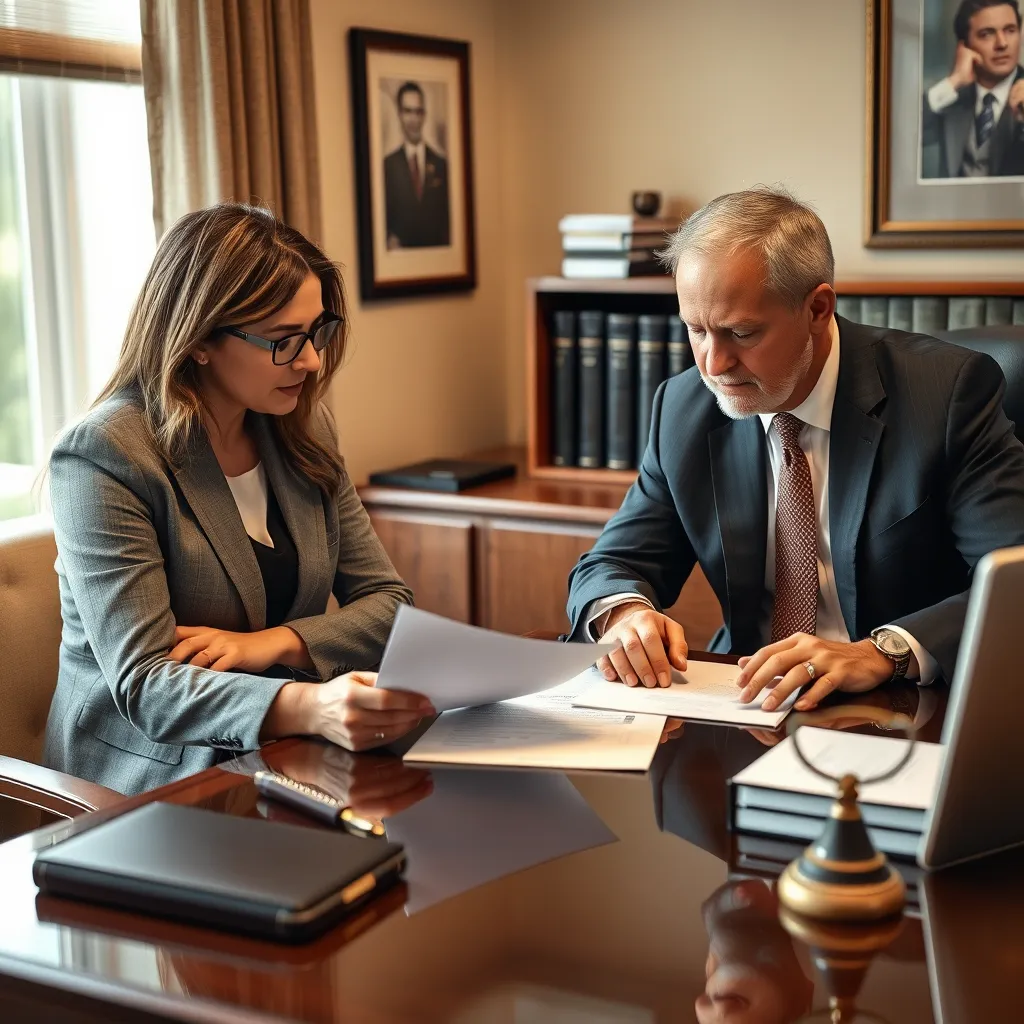
Postnup Lawyer Suffolk, VA
A postnuptial agreement—sometimes called a postnup—allows married couples in Suffolk, Virginia, to clarify financial rights and responsibilities during the marriage without necessarily pursuing a divorce. The agreement can address property classification, spousal support, business interests, and other financial matters within the framework of Virginia equitable distribution law. Law Offices Of SRIS, P.C. represents individuals and couples who are considering a postnuptial agreement in Suffolk and throughout the Hampton Roads region. Mr. Sris and the firm’s Of Counsel attorneys guide clients through negotiation, drafting, and enforcement of these agreements. To schedule a consultation about a postnuptial agreement, call (888) 437-7747. Law Offices Of SRIS, P.C. – Advocacy Without Borders.
What Postnuptial Agreements Mean in Suffolk, Virginia
In Virginia, postnuptial agreements are governed by the same statutory scheme that addresses premarital agreements—the Virginia Premarital Agreement Act, found at Va. Code § 20‑147 et seq. A postnuptial agreement is a contract between spouses entered into after marriage. It can define what property is separate, what is marital, and how assets and debts would be divided if the marriage ends. Because Virginia is an equitable distribution state rather than a community property state, a postnuptial agreement can provide certainty about division of property that would otherwise be determined by a court applying the eleven factors in Va. Code § 20‑107.3.
For Suffolk families, postnuptial agreements can be particularly useful when one spouse owns a business, when there is an inheritance, or when a couple wants to preserve assets for children from a prior relationship. The Suffolk Circuit Court, located at 150 North Main Street, Suite 2G in Suffolk, handles any litigation arising from a postnuptial agreement—such as enforcement or a challenge to the agreement’s validity. Matters involving spousal support or child‑related issues may also come before the Suffolk Juvenile and Domestic Relations District Court. The firm’s Richmond location represents clients throughout Suffolk, Harbour View, and North Suffolk, and is familiar with the procedural expectations of the Fifth Judicial District.
Suffolk General District Court is currently presided over by Hon. Robert C. Barclay IV. Court hours: Mon-Fri 8:00AM-4:00PM. Counsel appearing on family law matters should plan filings accordingly.
Couples who enter a postnuptial agreement can resolve many financial questions while their marriage remains intact. The agreement can also streamline a potential divorce later, reducing conflict and legal expense. But the agreement must be properly drafted and executed to be enforceable. Virginia law requires full and fair disclosure of assets, and the agreement must be entered voluntarily—a court will set aside a postnuptial agreement that is the product of duress, fraud, or unconscionability. Working with experienced counsel helps ensure the agreement meets Virginia’s requirements.
How Mr. Sris and the Firm’s Of Counsel Attorneys Handle Postnuptial Agreement Cases
Law Offices Of SRIS, P.C. approaches postnuptial agreements as collaborative planning documents, not as adversarial litigation. The initial consultation focuses on the couple’s goals: clarity about property classification, protection of separate assets, business succession planning, or spousal‑support expectations. Mr. Sris and the firm’s Of Counsel attorneys then draft an agreement tailored to the couple’s specific financial circumstances, ensuring compliance with the Virginia Premarital Agreement Act.
Because postnuptial agreements require each spouse to make a full and accurate disclosure of assets, debts, and income, the firm works with financial professionals when complex valuations are needed—for example, for a closely held business, professional practice, or retirement accounts. Negotiation is handled through direct communication between counsel or, in some cases, mediation. The objective is an agreement that both spouses understand and accept voluntarily. If a dispute later arises—such as a challenge to enforcement during a divorce—Mr. Sris and the firm’s Of Counsel attorneys are prepared to litigate in the Suffolk Circuit Court or the appropriate Virginia court. The firm’s multi‑state practice also benefits couples who own property in other jurisdictions, as Mr. Sris is admitted in Virginia, Maryland, the District of Columbia, New Jersey, and New York.
About Mr. Sris and the Firm’s Of Counsel Attorneys
Mr. Sris, Owner and Founder of Law Offices Of SRIS, P.C., established the firm in 1997 and has guided its growth into a multi‑state practice with locations in Virginia, Maryland, the District of Columbia, New Jersey, and New York. A former prosecutor, Mr. Sris testified before the Virginia House Courts of Justice Committee in support of 2019 HB 635 (chief patron Del. David Bulova), legislation that clarified certain aspects of Virginia’s equitable distribution statute.
The firm’s Of Counsel attorneys include a former Maryland prosecutor, a former Virginia State Trooper, and other litigators with decades of combined courtroom experience. Together, Mr. Sris and the firm’s Of Counsel attorneys bring extensive combined legal experience to family law matters. Results may vary. The firm’s Richmond location serves Suffolk clients, handling postnuptial agreement consultations, drafting, and litigation with attention to the local court environment.
Frequently Asked Questions
What is a postnuptial agreement in Virginia?
A postnuptial agreement is a written contract between spouses entered into after marriage that defines property rights, spousal‑support obligations, and other financial arrangements. It functions like a prenuptial agreement but is executed during the marriage rather than before. Virginia’s Premarital Agreement Act (Va. Code § 20‑147 et seq.) applies to postnuptial agreements. The agreement can specify what assets are separate or marital, and in the event of divorce the agreement can control—rather than the default equitable distribution factors—as long as it meets Virginia’s enforceability standards.
How is a postnuptial agreement different from a prenuptial agreement?
The primary difference is timing: a prenuptial agreement is signed before marriage, while a postnuptial agreement is signed after the wedding has already taken place. Both are governed by the same Virginia statute, and both serve to override default equitable distribution rules. However, courts may scrutinize postnuptial agreements somewhat more carefully because the parties are already married at the time of signing, and a spouse may later claim the agreement was signed under duress or without full financial disclosure. Proper drafting and separate legal representation help reduce the risk of later challenge.
What makes a postnuptial agreement enforceable in Virginia?
For a postnuptial agreement to be enforceable, it must be in writing, signed by both parties, and entered into voluntarily after full and fair disclosure of each spouse’s assets and liabilities. Virginia courts will also consider whether the agreement is unconscionable when executed and whether it remains fair under the circumstances at the time of enforcement. Working with an attorney to document the disclosure process and to confirm that neither party was pressured can strengthen enforceability. The Suffolk Circuit Court would hear any challenge to the agreement’s validity.
Do I need a lawyer for a postnuptial agreement in Suffolk?
Virginia law does not require you to hire a lawyer to create a postnuptial agreement, but having independent legal counsel significantly improves the likelihood the agreement will be enforced if it is ever challenged. An attorney can explain how Virginia’s equitable distribution system interacts with the proposed terms, ensure the statutory formalities are observed, and document the voluntary nature of the agreement. If you are in Suffolk and considering a postnuptial agreement, you can contact Mr. Sris and the firm’s Of Counsel attorneys to discuss your situation.
How does equitable distribution affect a postnuptial agreement?
Virginia divides marital property according to equitable distribution rather than a rigid 50‑50 split, and a properly drafted postnuptial agreement can replace the court’s discretion with the parties’ own agreed‑upon formula. Without an agreement, a Suffolk Circuit Court judge would apply Va. Code § 20‑107.3’s eleven factors to divide property. A postnuptial agreement allows couples to decide their own outcome—for example, keeping a family business separate or protecting an inheritance. The agreement can also address spousal support, subject to statutory limits on waiving support entirely.
Can a postnuptial agreement be modified or revoked?
Yes, a postnuptial agreement can be modified or revoked by a subsequent written agreement signed by both spouses. The same formalities required for the original agreement typically apply to any amendment—full disclosure, voluntariness, and writing. Oral modifications are generally not enforceable. If the couple later divorces and one spouse argues the agreement should be set aside, the matter would be litigated in the local circuit court. Mr. Sris and the firm’s Of Counsel attorneys can assist with both the initial agreement and any later modifications.
For nearby family law representation, see our Fairfax County family law page, Prince William County family law page, Manassas family law page, and Fairfax City family law page.
Authoritative Virginia sources: Virginia Code Title 20 (Domestic Relations), Virginia Courts, and Va. Code § 20‑147 (Premarital Agreement Act).
Attorney advertising. Prior results do not guarantee a similar outcome. Results may vary.
Case results depend on a variety of factors unique to each case.