
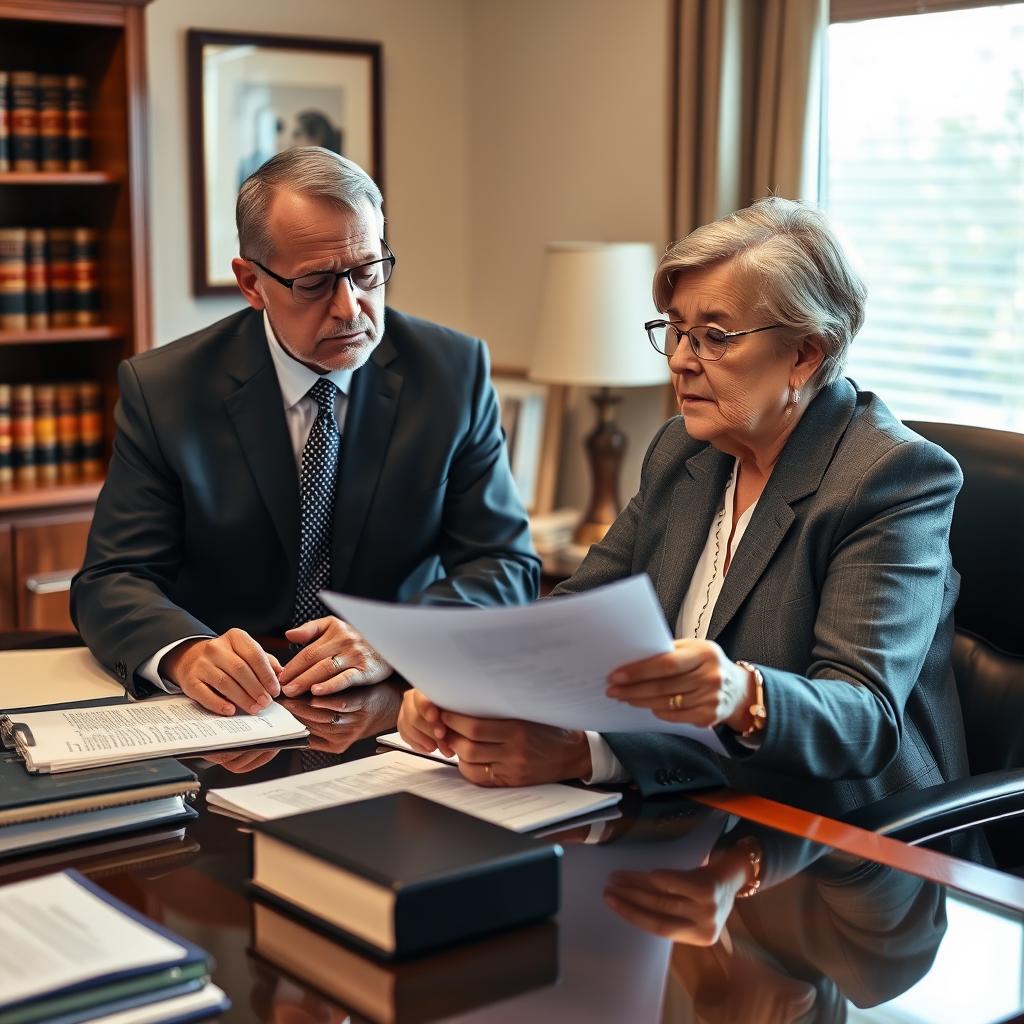
Rehabilitative Alimony Lawyer York County, VA
Rehabilitative alimony is a form of spousal support designed to help a dependent spouse become self‑supporting. In York County, Virginia, these matters are heard in the Circuit Court at 300 Ballard Street, Yorktown, where a judge evaluates the financial circumstances of both parties and determines whether a temporary support award is appropriate. Law Offices Of SRIS, P.C., founded in 1997, represents individuals seeking or opposing rehabilitative alimony throughout the Yorktown, Grafton, Tabb, and Seaford communities. Mr. Sris and his Of Counsel team appear before the York County Circuit Court and the Juvenile and Domestic Relations District Court when spousal support issues arise in the context of divorce, separation, or family law disputes. The analysis under Va. Code § 20‑107.1 is fact‑intensive; having an attorney who knows how the statutory factors apply locally can make a material difference in how the court views the request. To discuss your situation and learn how Mr. Sris and his Of Counsel approach rehabilitative alimony in York County, reach Law Offices Of SRIS, P.C. at (888) 437‑7747. Law Offices Of SRIS, P.C. — Advocacy Without Borders.
What Rehabilitative Alimony Means in York County, Virginia
Rehabilitative alimony — often called temporary spousal support — is not a permanent award. It is a court‑ordered payment from one spouse to the other for a defined period, with the goal of enabling the receiving spouse to obtain education, training, or job‑related skills so that they can eventually become economically independent. Virginia law treats rehabilitative alimony as one form of spousal support under Va. Code § 20‑107.1. The statute lists thirteen factors the court must weigh, including the duration of the marriage, the standard of living established during the marriage, each party’s age and physical condition, the earning capacity of both spouses, and the contributions each spouse made to the family’s well‑being.
In York County, the Circuit Court on Ballard Street hears all divorce and equitable distribution actions; spousal support requests — including rehabilitative alimony — are typically litigated within the divorce case. The Juvenile and Domestic Relations District Court may handle standalone support issues when a divorce complaint has not yet been filed. Because the court has broad discretion in setting both the amount and the duration of support, the same set of facts can lead to different outcomes depending on how the statutory factors are presented. Mr. Sris and his Of Counsel analyze the financial records, employment histories, and educational backgrounds of both parties and frame the request in a way that aligns with how the York County courts have treated similar fact patterns. Mediation is available but not mandatory in Virginia, and many rehabilitative alimony disputes are resolved through a negotiated settlement agreement without the need for a contested hearing.
How Mr. Sris and His Of Counsel Handle Rehabilitative Alimony Cases
When a client asks for rehabilitative alimony, the first step is a detailed review of the financial picture. Mr. Sris and his Of Counsel obtain tax returns, pay stubs, business records, and any other documentation that shows the income and expenses of both spouses. They also examine the requesting spouse’s vocational history, educational background, and any medical or childcare considerations that affect the ability to work. The goal is to present the court with a clear, evidence‑based narrative of why support is needed, how much is appropriate, and for how long.
If the case cannot be settled, the matter proceeds to a hearing before the York County Circuit Court. Mr. Sris and his Of Counsel prepare the client for the evidentiary presentation and, where warranted, work with vocational attorneys who can speak to the retraining plan, the local job market, and the realistic timeline for achieving self‑sufficiency. They also ensure that the support award is crafted so that it may be modifiable if the financial circumstances of either party change materially after the order is entered. For the paying spouse, the team focuses on demonstrating that a reasonable support period is set and that the award does not exceed the spouse’s ability to pay. Every rehabilitative alimony case is fact‑specific; the firm’s approach is to build a thorough record and advocate for an outcome that reflects the actual needs and resources of the parties.
About Mr. Sris and His Of Counsel Team
Mr. Sris, Owner and Founder of Law Offices Of SRIS, P.C., has been practicing in Virginia since 1997. A former prosecutor, he testified before the Virginia House Courts of Justice Committee in support of 2019 HB 635 (chief patron Del. David Bulova). He is admitted to practice in Virginia, Maryland, the District of Columbia, New Jersey, and New York, and handles family law matters across the five jurisdictions. His background includes representation of clients in complex divorce and support cases, which gives him a wide‑angle view of how rehabilitative alimony issues play out both locally and in cross‑jurisdictional settings.
Mr. Sris is joined by a team of Of Counsel attorneys who bring extensive experience in family law and litigation. Collectively, Mr. Sris and his Of Counsel bring over 120 years of combined legal experience and have achieved 4,739+ documented firm-wide results. Results may vary. The team works from the firm’s Richmond location at 7400 Beaufont Springs Drive, Suite 300, Room 395, Richmond, VA 23225, and appears regularly in the York County courts. All consultations are by appointment; the firm does not accept walk‑ins.
Frequently Asked Questions
What is rehabilitative alimony in Virginia?
Rehabilitative alimony is time‑limited spousal support intended to help a dependent spouse gain the education or training needed to become self‑supporting. Unlike permanent alimony, it is awarded for a finite period — often tied to a vocational plan — and may be modified if circumstances change. Virginia courts consider the factors in Va. Code § 20‑107.1, including the length of the marriage, each spouse’s earning capacity, and the contributions made during the marriage. The goal is to bridge the gap until the recipient can support themselves, not to provide lifetime maintenance.
How does the court decide whether to award rehabilitative alimony?
The court weighs thirteen statutory factors under Va. Code § 20‑107.1, giving particular attention to the financial needs of the requesting spouse and the other spouse’s ability to pay. The judge also evaluates the feasibility of a rehabilitation plan — such as a degree program or vocational training — and whether the requesting spouse can reasonably complete it within a defined timeframe. Evidence of the local job market, childcare obligations, and health issues all play a role. The court has broad discretion, so the quality of the presentation matters significantly.
How long does rehabilitative alimony last?
There is no fixed maximum; the duration depends on the facts of the case and the time reasonably needed for the recipient to become self‑supporting. The court may set a specific end date or tie support to the completion of a degree or training program. If the recipient fails to make reasonable progress, the payor may seek modification or termination. In York County, judges look for concrete, realistic timelines and will not extend support indefinitely without a showing of good cause.
Can rehabilitative alimony be modified or terminated?
Yes, rehabilitative alimony can be modified or terminated if there is a material change in circumstances. Common triggers include the recipient’s completion of the planned education, a substantial increase in the recipient’s income, cohabitation in a marriage‑like relationship, or the remarriage of the recipient. The paying spouse must petition the court and demonstrate that the change is significant and was not contemplated at the time of the original order. Early involvement of legal counsel helps ensure the order is drafted to address potential future modifications.
Do I need a lawyer for rehabilitative alimony in York County?
While no law requires you to hire an attorney, having a lawyer who understands York County court procedures and Virginia spousal support law puts you in a stronger position. Rehabilitative alimony cases involve detailed financial disclosures, often require expert testimony, and turn on how the facts are presented to the judge. An attorney can help you build the record, negotiate a settlement, or litigate the issue if necessary. Mr. Sris and his Of Counsel appear regularly before the York County Circuit Court and can advise you on the likely range of outcomes under local practice.
How do I contact a rehabilitative alimony lawyer in York County, VA?
You can reach Law Offices Of SRIS, P.C. at (888) 437‑7747 to request a consultation with Mr. Sris and his Of Counsel team. Appointments are available by phone or in person at the firm’s Richmond location, and the firm represents clients throughout Yorktown, Grafton, Tabb, and Seaford. The initial conversation allows the attorney to learn about your financial situation, explain the statutory factors, and outline a strategy tailored to your circumstances. No outcome is promised; each case is evaluated on its own merits.
Our firm also handles family law matters in James City County, Williamsburg, and Fairfax County.
Virginia spousal support statutes: Virginia Code (LIS) · Virginia Courts
Attorney advertising. Prior results do not guarantee a similar outcome. Results may vary.
Case results depend on a variety of factors unique to each case.