
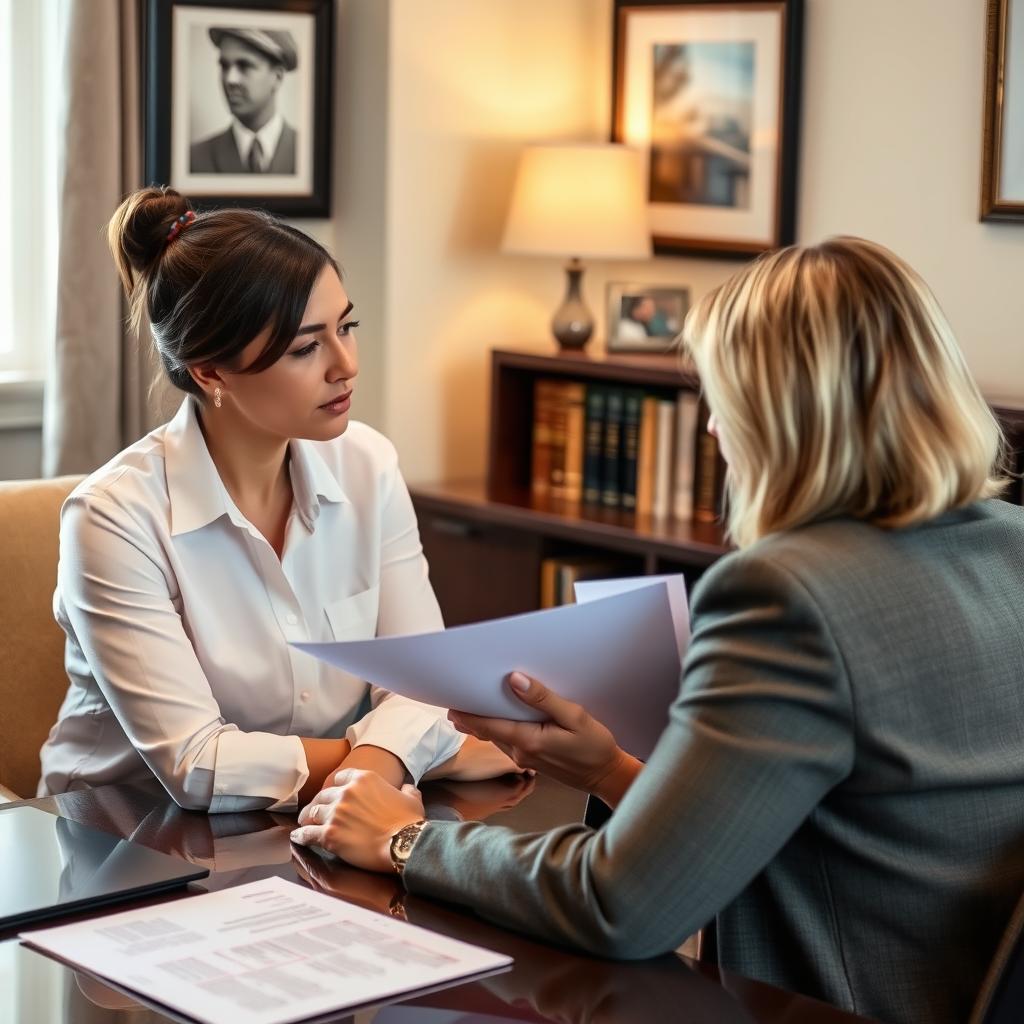
Spousal Support Lawyer Gloucester County, VA
You filed for divorce, or your spouse did. Now you’re sitting across a kitchen table in Gloucester or Gloucester Point, wondering how the monthly finances will work while the case moves forward — and what you’ll owe or receive once it’s final. Spousal support in Virginia is not a one-size-fits-all calculation. The judges in Gloucester County Circuit Court and Juvenile & Domestic Relations District Court weigh thirteen separate factors before deciding whether support is appropriate, how much, and for how long. Mr. Sris and the firm’s Of Counsel attorneys handle spousal support matters for clients throughout Gloucester County. Reach Law Offices Of SRIS, P.C. at (888) 437-7747 to request a consultation. Law Offices Of SRIS, P.C. – Advocacy Without Borders.
Law Offices Of SRIS, P.C. — founded in 1997. Admitted in Virginia, Maryland, District of Columbia, New Jersey, and New York. 100+ client reviews.
Richmond Location — 7400 Beaufont Springs Drive, Suite 300, Room 395, Richmond, VA 23225 | By appointment. Call (888) 437-7747 to schedule.
In Gloucester County, Virginia, spousal support is determined by the Circuit Court (if part of a divorce) or the Juvenile & Domestic Relations District Court (if a standalone petition) using the factors listed in Va. Code § 20‑107.1. No automatic formula applies; judges evaluate factors such as earning capacity, the standard of living during the marriage, and the duration of the marriage to decide whether support is warranted, what amount to award, and for how long.
Strategy options when spousal support is in dispute
Mr. Sris and the firm’s Of Counsel attorneys approach each Gloucester County spousal support matter by identifying whether the primary dispute is over the entitlement to support itself, the monthly amount, or the duration of payments. That early triage shapes the entire case.
For clients seeking support, the team gathers income documentation, tax returns, and evidence of the marital standard of living. They work with vocational attorneys when needed to assess earning capacity. For clients from whom support is requested, they examine ability to pay, separate property, and the requesting spouse’s capacity to become self-supporting. When both sides are open to negotiation, a signed separation agreement resolving spousal support can avoid litigation entirely. When agreement is not possible, the team presents the statutory factors through testimony and documentary evidence at a pendente lite hearing or final trial in Gloucester Circuit Court.
The thirteen factors under Va. Code § 20‑107.1 include the parties’ ages and health, the contributions each made to the family (monetary and non‑monetary), the earning capacity of both, and the decisions that led to the end of the marriage. The court balances these factors, and Mr. Sris and the firm’s Of Counsel attorneys ensure that the factual record presented to the judge reflects a complete picture of the marriage. For the full statutory breakdown, see the comprehensive analysis on our main site.
What to expect when spousal support is litigated in Gloucester County
Spousal support can be temporary (pendente lite, while the divorce is pending) or permanent (part of the final decree). In Gloucester County, pendente lite hearings are typically set by the court after a motion is filed. The judge will hear limited evidence — usually income and expense statements — and enter an order that remains in effect until the divorce is concluded. That temporary order shapes how the household bills are paid during the months the case is litigated.
At the final stage, Gloucester Circuit Court holds an evidentiary hearing if the parties have not settled. The judge receives testimonial and documentary evidence on each of the statutory factors. Because Virginia is an equitable distribution state, the property division does not automatically dictate spousal support, but the two are often negotiated together. A spouse who keeps the marital home, for example, may receive less support or none at all, depending on the overall settlement. Mr. Sris and the firm’s Of Counsel attorneys negotiate support and property division as interconnected issues to arrive at a workable financial arrangement.
Once a support order is entered, either party can seek modification later if a material change in circumstances occurs — loss of a job, a serious illness, or a substantial change in the other spouse’s income. Enforcement actions for non‑payment are heard in the Juvenile & Domestic Relations District Court and can result in a show‑cause proceeding. The firm assists with modifications and enforcement when circumstances change.
Penalty overview — what the law actually says about spousal support
Virginia law does not impose “penalties” for spousal support the way criminal statutes punish conduct, but a court’s failure-to-pay finding carries serious consequences. Under Va. Code § 20‑107.1, the court retains the power to enforce its orders through contempt. A spouse who willfully violates a support order can face jail time, fines, or both, until the arrearage is paid or a payment plan is established. The court can also award attorney fees to the party who had to bring the enforcement motion.
For the paying spouse, falling behind on support is not just a collection issue. The arrears accrue interest at the judgment rate, and the court may garnish wages, intercept tax refunds, or suspend professional licenses. In Gloucester County, support enforcement proceedings are handled in the Juvenile & Domestic Relations District Court, which has the same contempt powers as the Circuit Court for support orders. A person found in contempt can be incarcerated unless they purge the contempt by paying a determined amount.
On the receiving side, failure to cooperate with a vocational evaluation or to make a good‑faith effort to become self‑supporting can reduce or terminate support. The statute expects both parties to act in good faith. Mr. Sris and the firm’s Of Counsel attorneys work to present the facts that demonstrate a client’s diligence—or the other side’s lack of it—when modification or termination is at issue.
Attorney credentials for Gloucester County spousal support representation
Mr. Sris is a former prosecutor. He founded Law Offices Of SRIS, P.C. in 1997 and, together with the firm’s Of Counsel attorneys, brings extensive combined legal experience. Family law, including spousal support negotiations and litigation in Gloucester County, forms a central part of the firm’s practice. Each attorney works to understand the financial reality of the marriage and present it clearly to the court or the opposing side. Results may vary.
The Of Counsel attorneys who contribute to the firm’s Gloucester County family law work include experienced litigators with backgrounds in Virginia law enforcement and complex family law trials. Their combined perspectives help clients see both the negotiation table and the courtroom clearly.
Frequently asked questions
How does a Gloucester County judge decide whether to award spousal support?
Virginia judges decide spousal support by weighing the thirteen factors listed in Va. Code § 20‑107.1. No one factor controls, and the judge has broad discretion to craft an award based on the evidence presented. The court considers the earning capacity, education, and training of each spouse; the standard of living established during the marriage; the duration of the marriage; each spouse’s age and health; the contributions each made to the family; and the property interests of each. In Gloucester County, support decisions are made after an evidentiary hearing unless the parties agree on terms in a signed separation agreement.
How long will I have to pay or receive spousal support in Gloucester County?
The duration of spousal support depends on the marriage length and the financial circumstances of both spouses. For a short marriage, support may be limited to a rehabilitative period—enough time for the lower‑earning spouse to gain education or employment. After a long marriage where one spouse was out of the workforce for years, the court may award permanent support (called indefinite support in Virginia). The judge sets a duration after considering the factors in Va. Code § 20‑107.1. Modification is possible later if a material change occurs.
Can spousal support be changed after the divorce is final?
Yes, spousal support can be modified if there is a material change in circumstances that was not anticipated at the time of the original order. Common changes include a substantial increase or decrease in either spouse’s income, involuntary job loss, a serious medical condition, or remarriage of the recipient (which terminates support in some circumstances). Modification petitions are filed in the Gloucester County Circuit Court or J&DR Court, depending on which court entered the original order. The party seeking the change must prove the changed circumstances to the judge.
What if my spouse refuses to pay the ordered spousal support?
You can file an enforcement motion with the Gloucester County Juvenile & Domestic Relations District Court. The court will issue a rule to show cause ordering your spouse to appear and explain why they have not paid. If the court finds a willful violation, it can hold the spouse in contempt and impose sanctions including jail time, fines, and attorney fees. The court can also order wage garnishment or intercept tax refunds to collect the arrears. Mr. Sris and the firm’s Of Counsel attorneys assist with enforcement motions and post‑order advocacy.
Do I need a lawyer for a spousal support case in Gloucester County?
While you are not legally required to have a lawyer, spousal support decisions involve complex fact‑gathering and statutory arguments that are difficult to present effectively without counsel. Income and expense statements, vocational reports, and tax returns must be properly authenticated and admitted into evidence. The judge’s broad discretion means that a poorly presented case can result in an order far different from what the facts would support. A lawyer can also negotiate a settlement that avoids a public court hearing entirely. To discuss your situation, reach Law Offices Of SRIS, P.C. at (888) 437-7747.
Is spousal support taxable in Virginia?
For support orders entered after December 31, 2018, spousal support is no longer taxable to the recipient and is not deductible by the payor under federal law. This change, enacted by the Tax Cuts and Jobs Act of 2017, applies to all orders signed after the effective date. Virginia tax treatment follows federal treatment. Older orders may still be taxable if the parties have not modified them. A lawyer can explain how the tax rule affects settlement negotiations, because the after‑tax cost to the payor and the after‑tax benefit to the recipient directly impact what a fair monthly amount looks like.
How can I avoid paying spousal support in Gloucester County?
Virginia law does not permit a spouse to unilaterally avoid spousal support, but the court may reject a request for support if the petitioning spouse does not prove a financial need or if the other spouse lacks the ability to pay. A spouse who is self‑supporting and fails to demonstrate a gap in earnings may not receive support. A spouse whose own fault caused the marriage to fail—for example, adultery—may see that fact weigh against an award for an indefinite period. Each case turns on its specific facts, and a lawyer can evaluate whether the thirteen factors tilt in your favor. For a consultation, reach Mr. Sris and the firm’s Of Counsel attorneys at (888) 437-7747.
Can I get spousal support before the divorce is final?
Yes, you can ask the Gloucester County Circuit Court for pendente lite spousal support while the divorce is pending. A motion for temporary support is filed after the divorce complaint is served. The court sets a hearing, often within a few weeks, and hears limited evidence about immediate needs and ability to pay. The temporary order stays in effect until the divorce decree is entered. This allows the lower‑earning spouse to continue meeting living expenses during the litigation.
What is the difference between spousal support and equitable distribution?
Spousal support is a cash payment from one spouse to the other, while equitable distribution is the division of marital property. Equitable distribution allocates assets and debts (houses, retirement accounts, cars, credit cards) under Va. Code § 20‑107.3. Spousal support fills a gap in income. The two are related—a spouse who receives a large share of marital property may receive less support, or none at all—but they are separate legal concepts. In Gloucester County, both are addressed in the same Circuit Court divorce action, although support can be addressed separately in the J&DR Court as well.
How does the court determine my spouse’s income if they are self‑employed?
The court examines tax returns, profit‑and‑loss statements, bank records, and business expense documentation to determine actual income, not just reported income. Self‑employed spouses sometimes deduct business expenses that do not truly reduce their personal living income. A lawyer can retain a forensic accountant to analyze cash flow and reconstruct true income. The Gloucester Circuit Court then uses that figure when applying the spousal support factors.
For a more detailed statutory analysis, visit the firm’s main spousal support overview at srislawyer.com/divorce-lawyer/.
Request a consultation: (888) 437-7747
Richmond Location — 7400 Beaufont Springs Drive, Suite 300, Room 395, Richmond, VA 23225 | By appointment. Call (888) 437-7747 to schedule.
Attorney advertising. Prior results do not guarantee a similar outcome. Results may vary. Case results depend on a variety of factors unique to each case.